
Thailand began using solar panels in 2002, and by 2022, there will be solar panels that have completed 20 years of usage, amounting to approximately 620,000 to 790,000 tons. Currently, there is no systematic technology or management for dealing with these waste panels. Most disposal methods are straightforward and uncomplicated, involving waste sorting followed by shredding into smaller pieces before being stabilized and disposed of in industrial waste landfills.
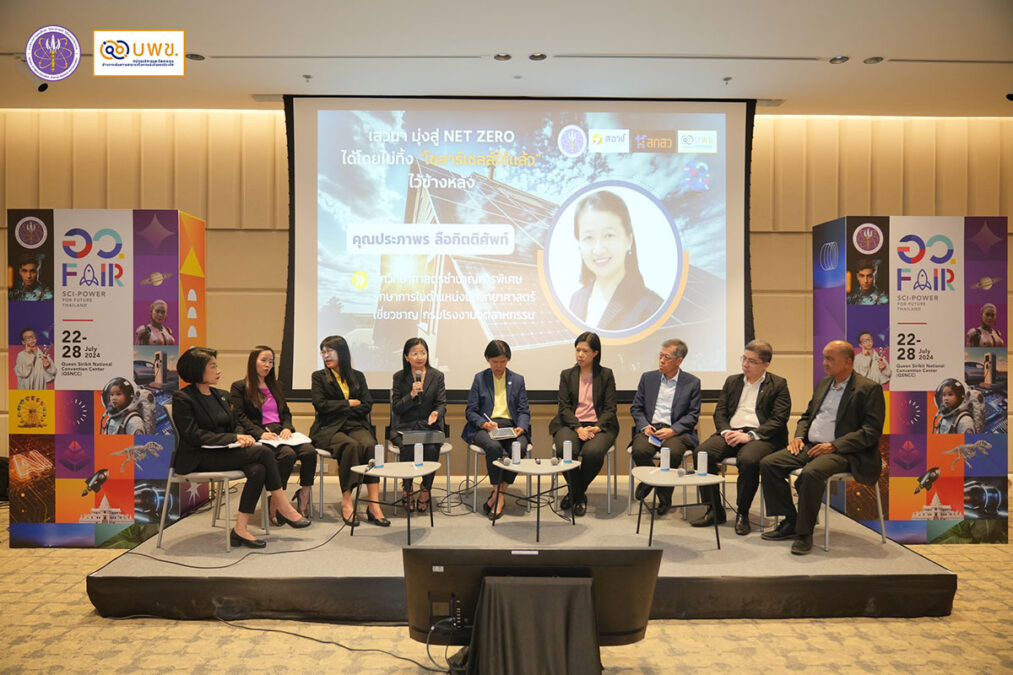
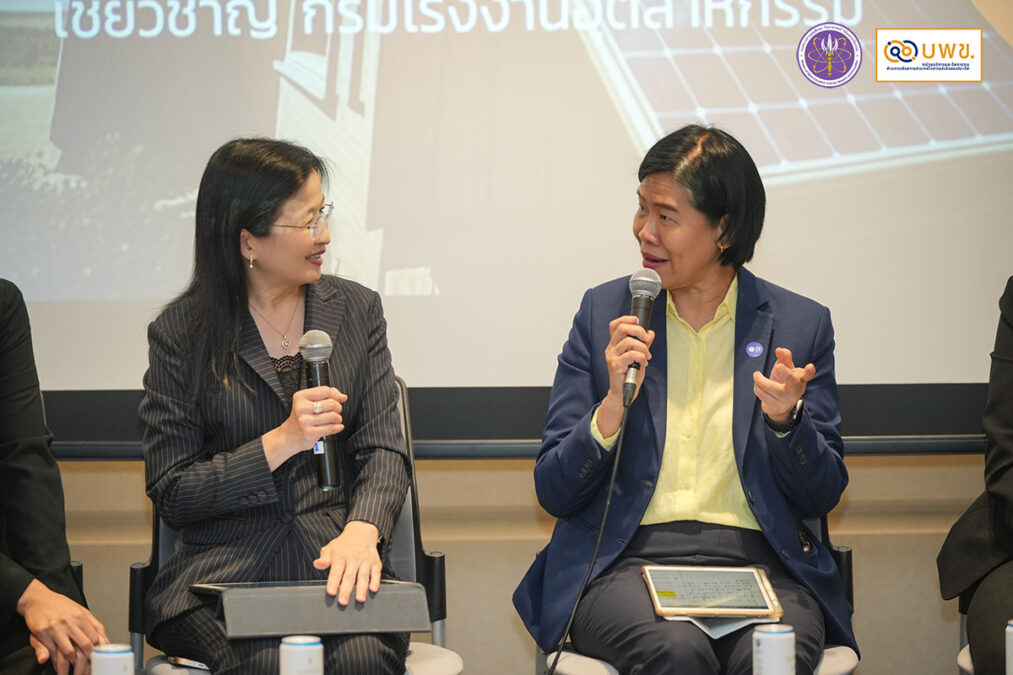
At the Ministry of Higher Education, Science, Research and Innovation’s (MHESI) “Avi Fair,” a discussion forum titled “Moving Towards NET ZERO Without Leaving Used Solar Panels Behind” was held. This event was organized by the Circular Economy Program under the Program Management Unit for Competitiveness (PMUC). Eight experts were gathered for brainstorming, including:
Ms. Paraporn Luekitthisap, a specialized scientist serving as interim expert scientist at the Department of Industrial Works;
Mr. Wanich Sawayo, director of the Hazardous Waste Division at the Pollution Control Department;
Mr. Nan Boonyachat, Ph.D., a specialized metallurgical engineer at the Department of Basic Industry and Mining;
Ms. Amornrat Limmani, Ph.D., head of the solar cell technology research team at the ENTEC energy innovation research group;
Ms. Patama Wongthuaithong, vice chairman of Solartron Public Company Limited;
Mr. Phairoj Panukarn, Ph.D., senior director at Gunkul Engineering Public Company Limited;
Mr. Akkrin Suwannarat, Ph.D., special assistant to the CEO and EVP at Energy Absolute Public Company Limited;
Mr. Monchai Poonphakdee, managing director of TARF Company Limited.
The discussion was moderated by Mr. Phongwipha Lorsomboon, Ph.D., chairman of the subcommittee for the Circular Economy Program under PMUC.
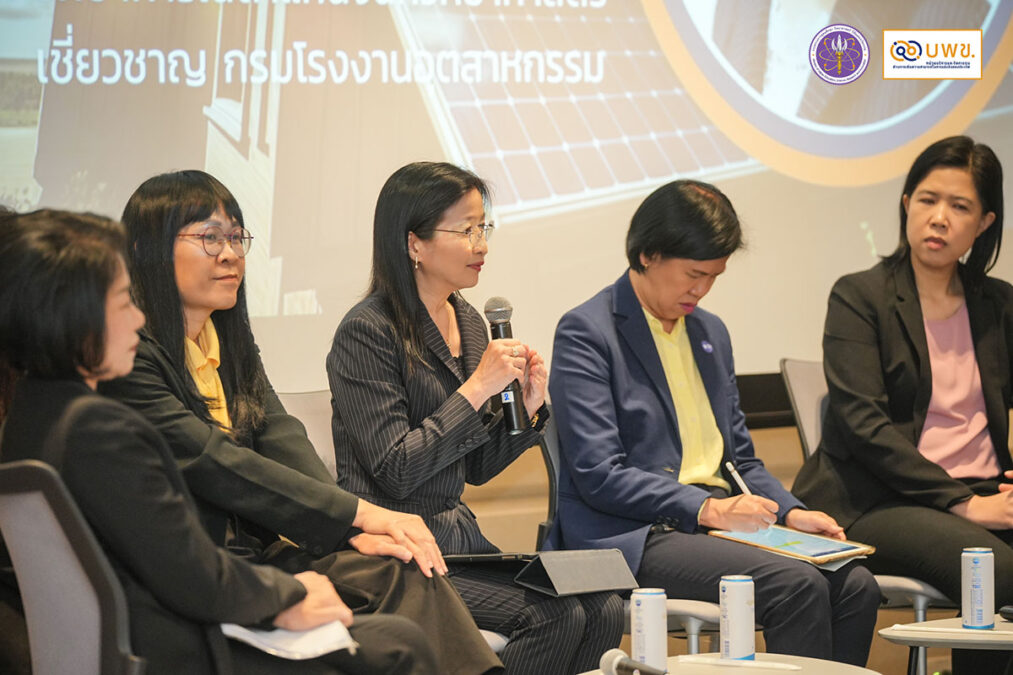
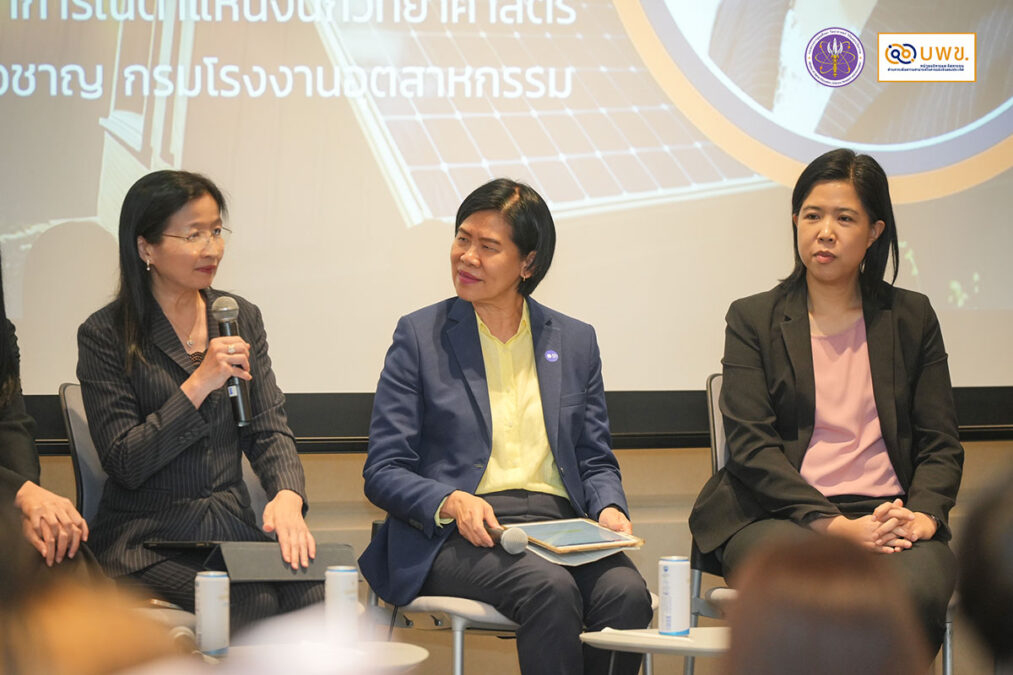
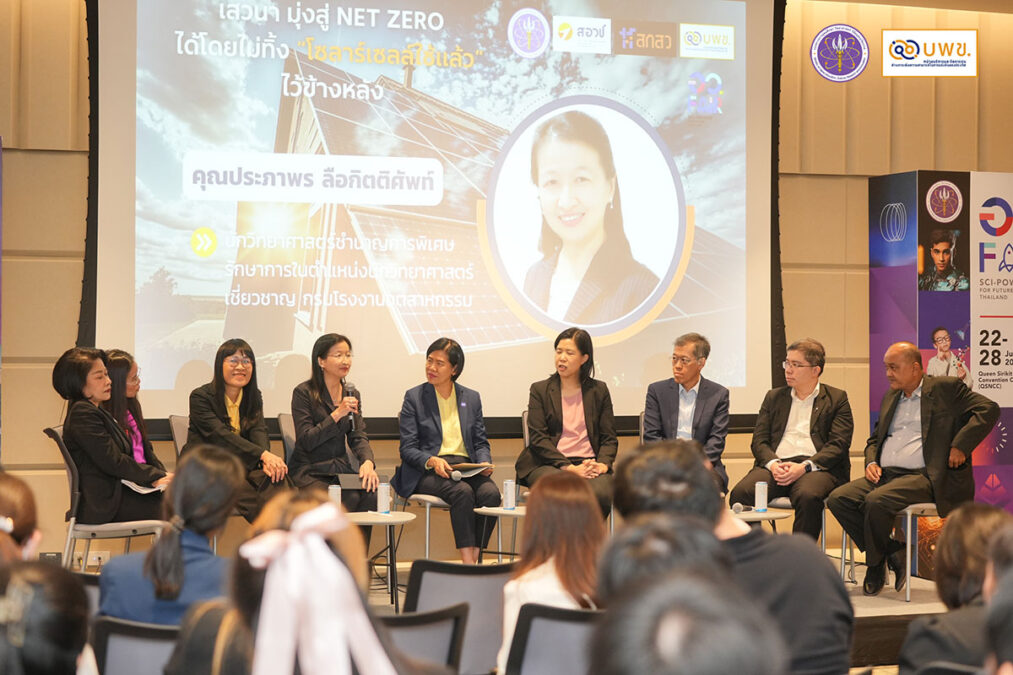
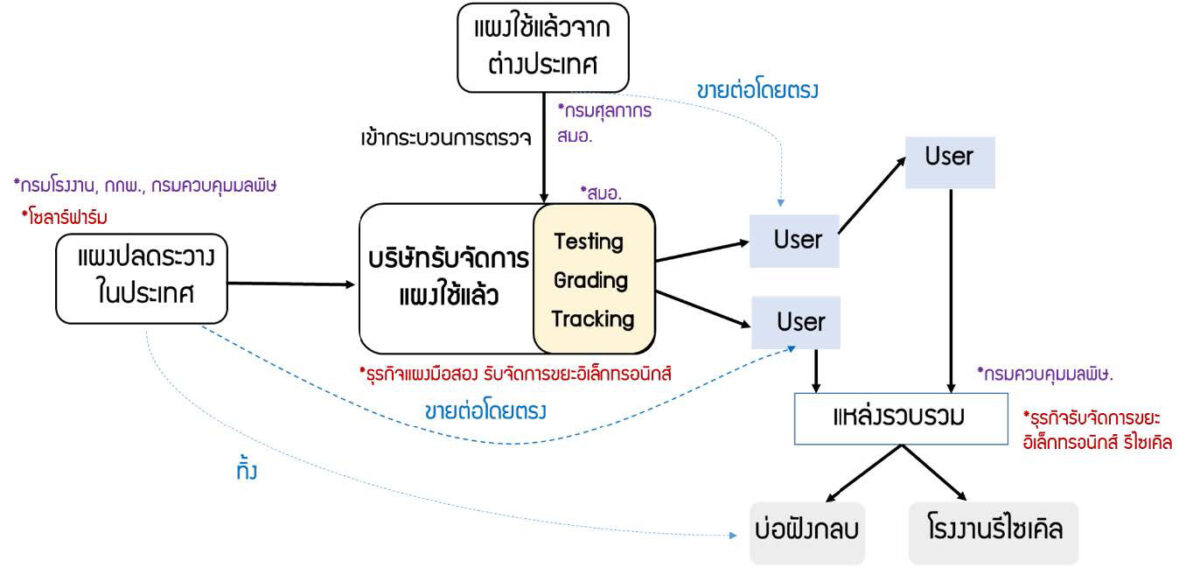
Dealing with Solar Panels at Nearly 400 Solar Farms.
The forum demonstrated that the popularity of solar panels is increasing as they are one viable option for achieving NET ZERO in the future. However, on the flip side, these panels harbor hidden dangers. While there may not be immediate problems today, if they are discarded haphazardly in various locations, it could lead to a waste crisis of solar panels across the country if we do not plan ahead.
Currently, Thailand has nearly 400 solar farms nationwide. It is undeniable that in the future, the number of used solar panels will be immense, and it is the responsibility of the relevant parties to plan for their management. Nonetheless, most solar panels, even after reaching their lifespan, still maintain good efficiency. While some may no longer be usable in factories, they still hold value and can generate electricity for communities, temples, schools, or even homes that lack access to electricity. Therefore, there are initiatives to donate these solar panels to various places, benefiting both the donors and the recipients. However, in the future, the disposal of deteriorated panels will become increasingly challenging, as these panels will be scattered throughout the country, and many communities will lack the capability to manage them. If those panels become unusable, that is what this forum aimed to gather opinions on to find future solutions for this waste.
One important agency, the Department of Industrial Works, has enacted two laws: the Factory Act and the Hazardous Substance Act, which includes solar panels classified as hazardous waste. It specifies that solar farms fall under the definition of factories (category 88 (1)). To remove ineffective or less efficient solar panels from the factory, procedures must follow the necessary authorization steps. They must be disposed of in hazardous waste landfills (Secure Land Fill) or incinerated in facilities designed for hazardous waste, or managed through other methods in compliance with hazardous substance laws.
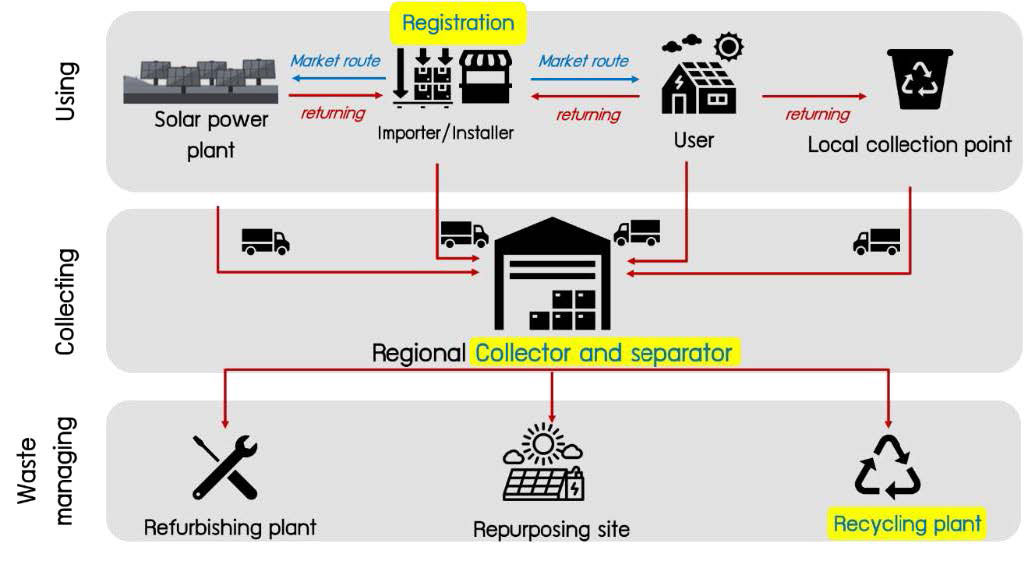
Reusing: The Right Choice
However, the Act of the Department of Industrial Works states that if solar panels have an efficiency of less than 70 percent, they are considered hazardous waste that must be disposed of properly. If they still have an efficiency of more than 70 percent, there is an opportunity for them to be reused, depending on where they will be sent. If they are to be donated to communities, schools, temples, or remote areas for continued use, a letter of consent from the local agency must be obtained, confirming that they are ready to accept the donation and acknowledge that solar panels with this level of efficiency will be put to beneficial use in the area. After that, the Department of Industrial Works will consider the transportation. If everything is in order, the solar panels will be reused in the area designated to receive the donated panels.
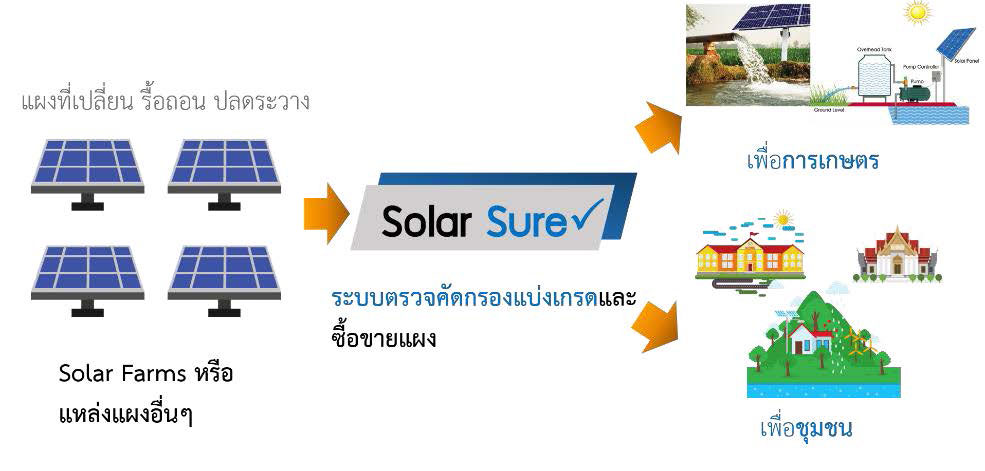
One of the conclusions from this forum is that reuse is an appropriate solution for managing solar panels, as most solar panels, after a certain period of use, may not be suitable for continued use in industrial factories—due to technological changes and increased production capacity—therefore requiring the replacement of the solar panels. However, if the efficiency of the original panels still exceeds 70 percent, they can be reused to be given to various locations that need them. If their efficiency drops below 70 percent, they may be disposed of or recycled for other uses.
From the perspective of solar panel manufacturers like Solartron, they view reuse as suitable for the context of Thai society, for instance, an industrial factory that has been in operation for 20 or 25 years with remaining efficiency of the panels of 80 percent, which is higher than the Department of Industrial Works’ requirement of 70 percent. Since Thailand is an agricultural-industrial country, there are still many areas without electricity. Therefore, the concept of reuse is supported, allowing farmers to continue using them to enhance their productivity. If farmers have a solar-powered water pumping system, they can increase productivity and elevate the standards of their crops. This can encourage their descendants to remain in their local areas, and laborers may want to return to their communities because they can earn income from their produce. In the future, solar panels can also be made into color strips, researching the spectrum of light in seven colors to determine which plants benefit most, ensuring that the produce meets high standards and becomes high-value economic crops, which has already been tested successfully in pilot areas like Udon Thani and Ubon Ratchathani.
The WEEE Act: A Law of Hope.
Another important agency is the Pollution Control Department (PCD), which, although it does not directly dispose of waste because it operates under the local administrative organizations (LAOs), serves as a central agency with the authority and responsibility to manage, plan, set standards, and create measures to address various problems that arise.
In the past, the PCD has been involved in addressing electronic waste issues, whether from discarded electrical appliances or various mobile phone devices, in collaboration with relevant agencies nationwide to develop plans, strategies, and methods for citizens to sort and dispose of waste at collection points for proper disposal.
The driving mechanism of the PCD is the development of various measures through the Electronic Waste Management Committee. Currently, they are drafting the Electronic Waste Management Act or WEEE Act, which covers both domestic production and imports from abroad. The structure of the Act consists of five categories and 52 sections, defining the types of electronic waste, with solar panel waste being one item that needs regulation.
Who is responsible for disposing of solar panel waste?
When asked how worrisome solar panels are as industrial waste compared to other types of electronic products, users perceive them as less alarming than the battery industry. However, systematic management planning is necessary because the lifespans of different components in solar panels vary; some parts may need replacement within five years. Therefore, disposal must take this into account, requiring collaboration from all parties, including manufacturers, users, and various agencies. Especially in the future, as households increasingly install solar panels on rooftops, careful planning is needed for how to manage panels when their efficiency declines.
One thing reflected from this forum is that even though the Department of Industrial Works regulates solar panel waste under factory laws, once these panels are used in homes, communities, educational institutions, and parks, it becomes a problem that when these panels deteriorate or reach the end of their useful life, there will be no place for them to go. Currently, Thailand does not have facilities specifically for disposing of solar panel waste; there are only recycling plants that take old, expired panels and replace the cells for reuse. Expired solar panels are either returned to foreign manufacturers or crushed and buried in industrial waste landfills.
It is undeniable that in the future, as solar panels spread across different areas, disposal will become increasingly complex and difficult to manage. Assigning this responsibility to local administrative organizations (LAOs) presents a heavy burden, especially without cooperation from related agencies from the beginning to the end of the waste management process. The discussion forum highlighted the awareness and preparedness to face future challenges. Above all, we, as users, must consider the environment, comply with conditions and regulations, and work together to manage waste properly. If we can achieve this, solar panel waste management will likely become easier.