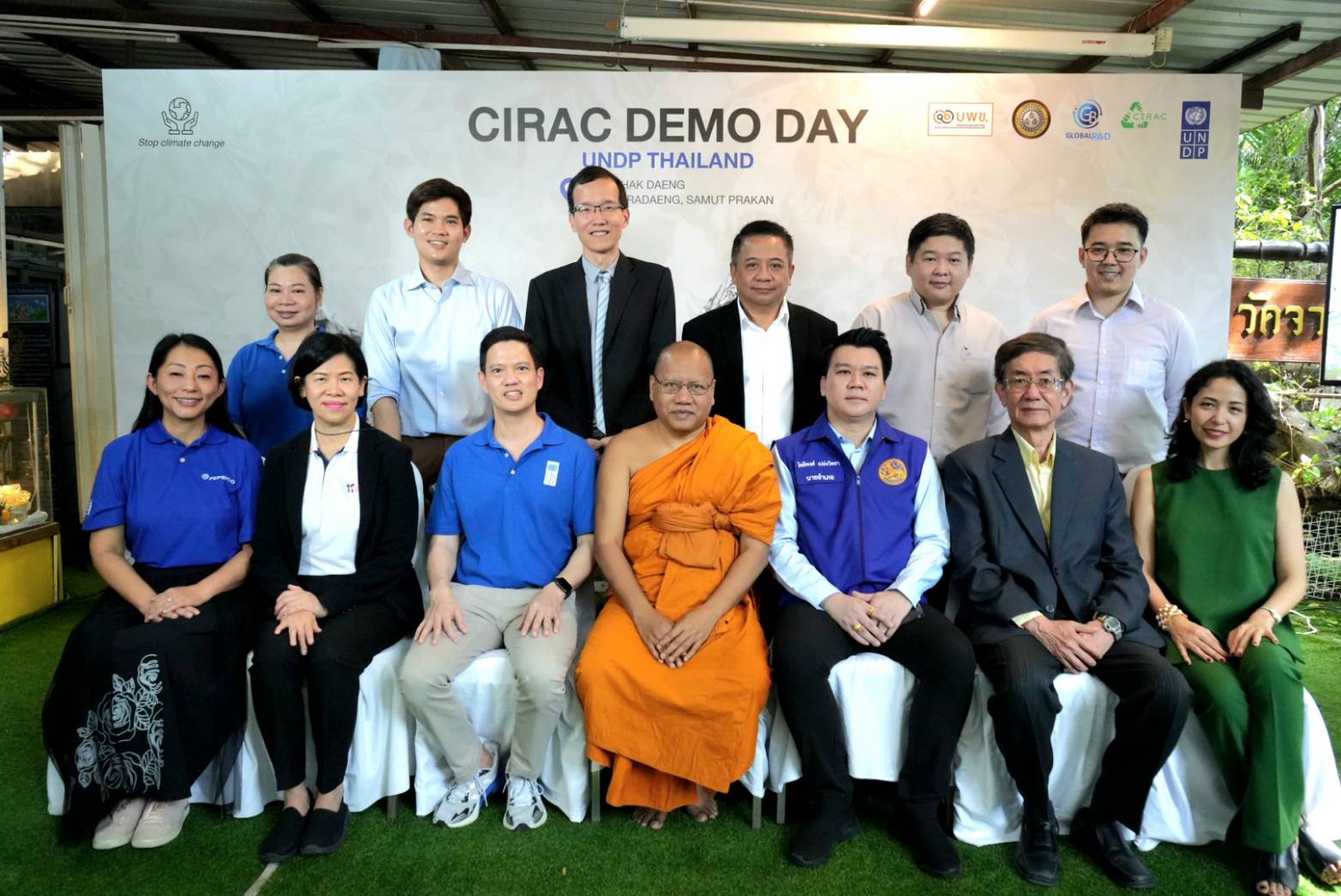
PMUC collaborated with UNDP, CIRAC, Global R&D Company Limited, the chemical engineering team from Chulalongkorn University, and the community of Wat Jakdang to address the sustainable solution to the problem of mixed plastic-aluminum laminated waste by designing a continuous pyrolysis machine by Thai people to recycle aluminum and plastic for commercial purposes.
Program Management Unit for Competitiveness (PMUC) under the Ministry of Higher Education, Science, Research, and Innovation (MHESI), participated in launching the continuous pyrolysis machine for recycling aluminum from laminated plastic-aluminum waste, commonly known as “multilayer bags,” to separate aluminum from laminated plastic and melt the separated aluminum into ingots with purity of over 97%, which can be reused in various industries requiring aluminum. The remaining plastic waste can be converted into fuel oil and sold. Additionally, the process yields fuel gas, which can replace LPG, contributing to reducing greenhouse gas emissions.
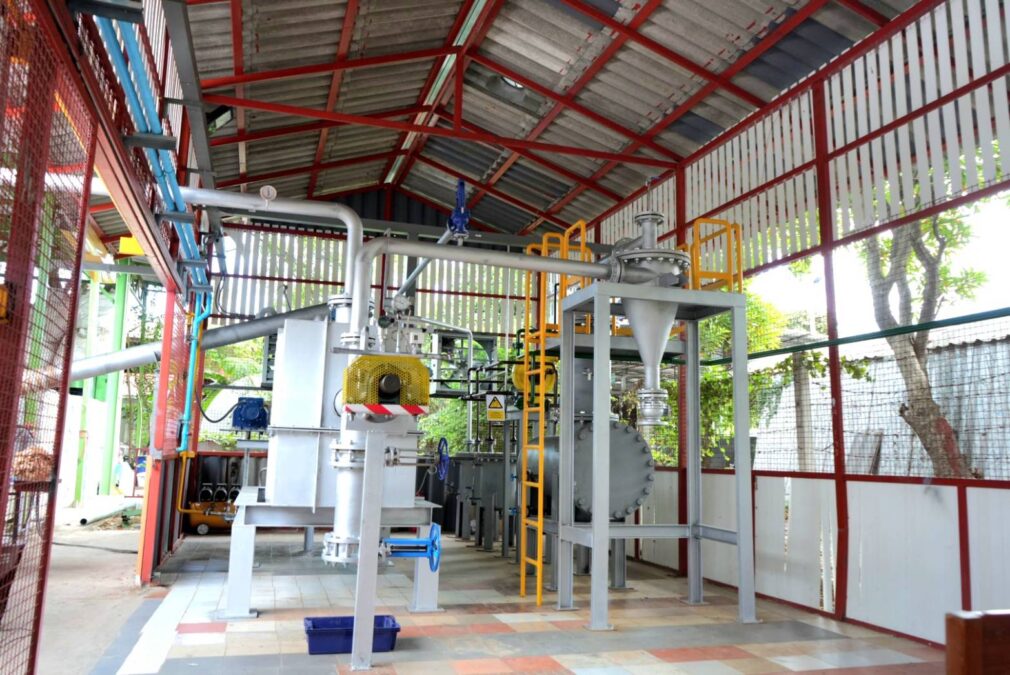
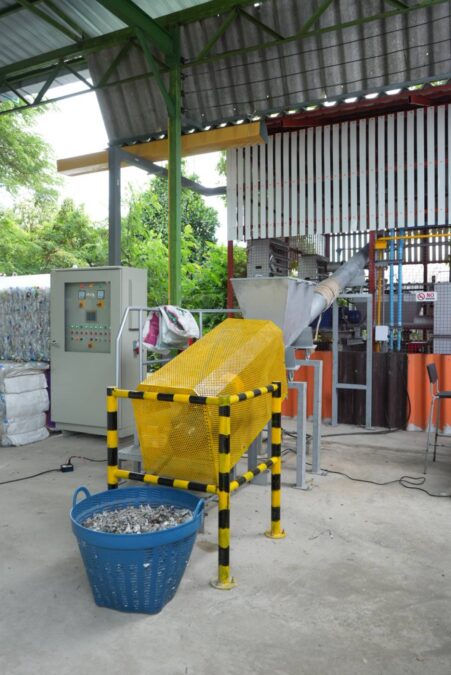
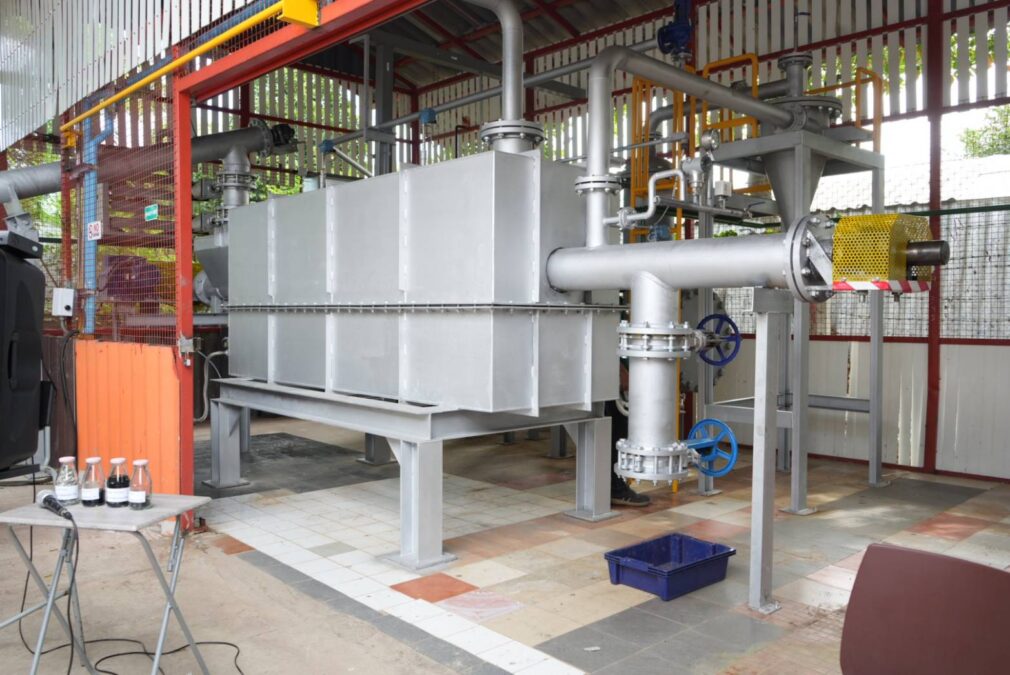
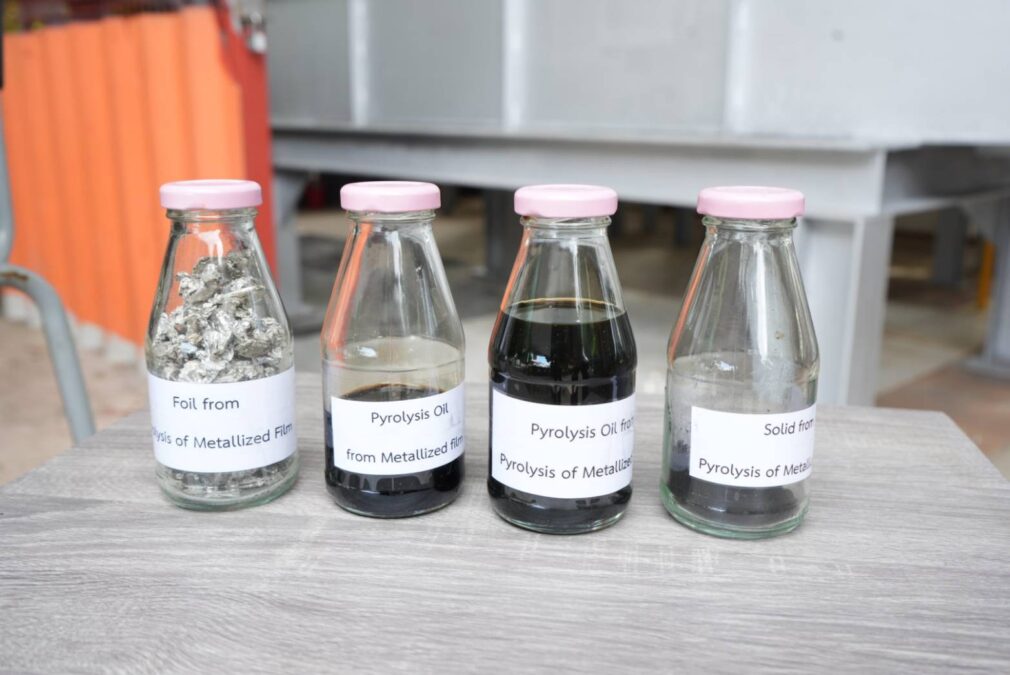
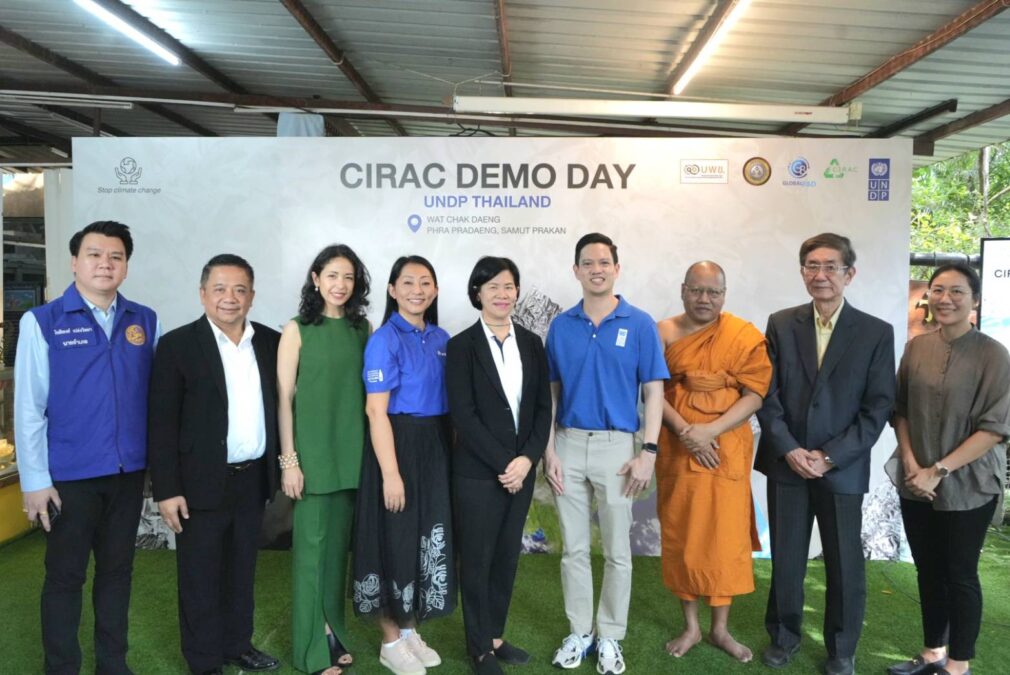
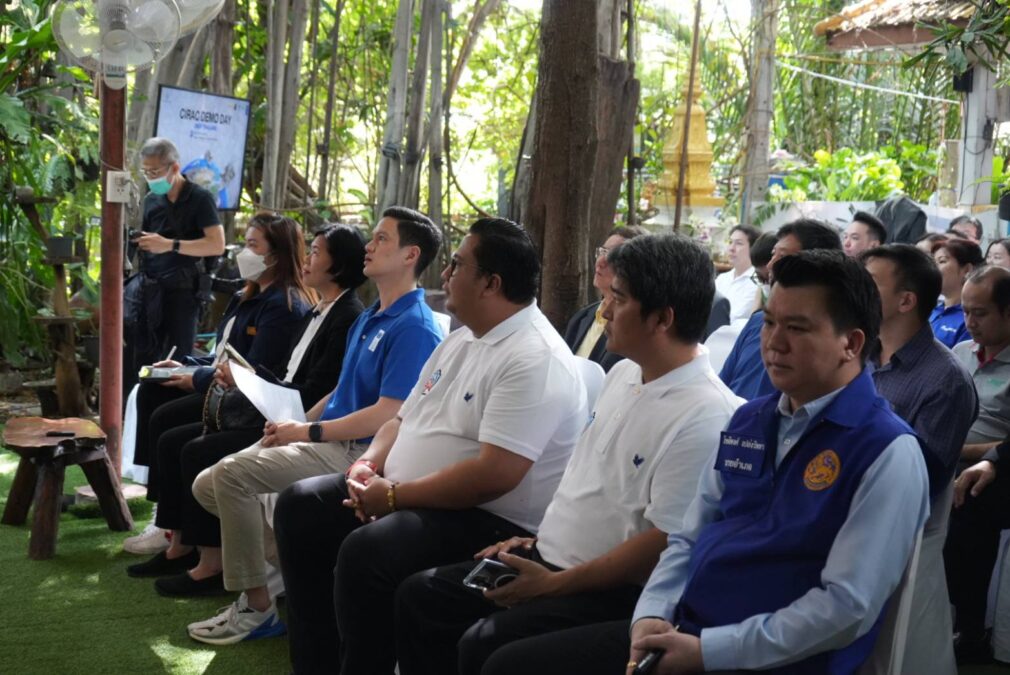
The aforementioned pyrolysis machine was designed by CIRAC and initially supported by UNDP for development at the lab scale. Later, it was further developed and scaled up by the research team from Chulalongkorn University led by Assoc. Prof. Prasert Riabroycharoen, Ph.D., Head of the Department of Chemical Engineering, and Global R&D Company Limited, with support from PMUC’s Circular Economy funding program. This resulted in a standardized, larger-scale, highly effective, and environmentally friendly machine to meet industrial demands. The research team installed the machine at Wat Jakdang, Samut Prakan Province, which is a successful community waste separation and learning center. The developers organized a “CIRAC Demo Day” on December 1, 2023, to demonstrate the machine’s operation and invite various private companies to witness it and discuss ways to commercialize the technology further.
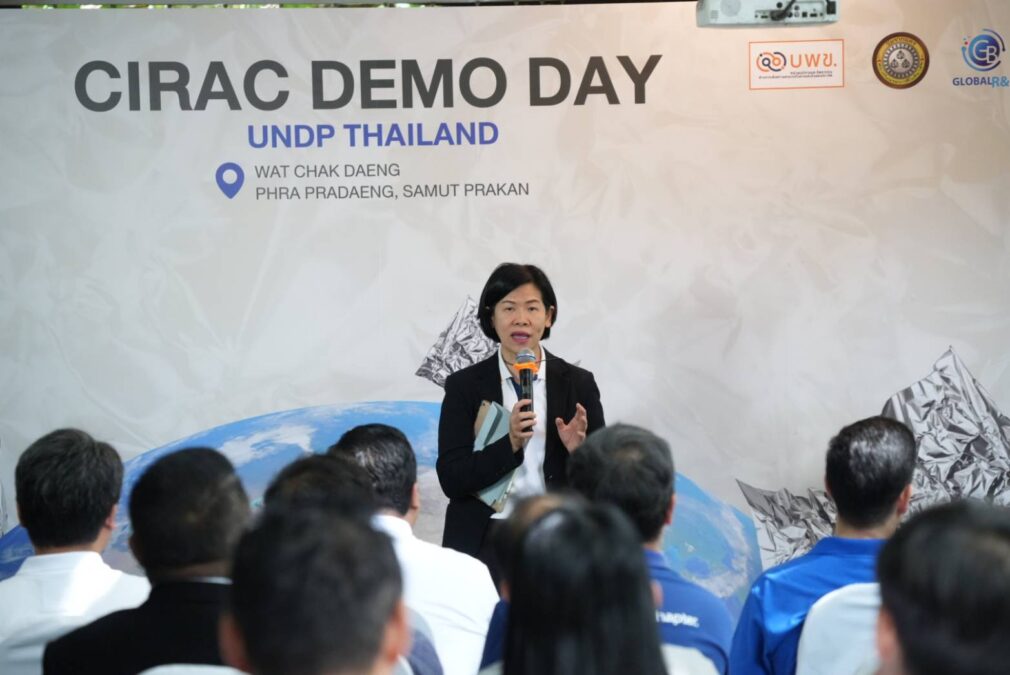
Mr. Pongvipa Lorsomboon, Ph.D., Chairman of the Circular Economy Subcommittee, PMUC, spoke about the success of the project as a supporting research funding agency, stating, “This project has met all the requirements of PMUC because this machinery uses pyrolysis principles to separate Laminated Plastic, especially aluminum, which is expected to be able to process approximately 100 kilograms of milk cartons and snack bags per day and recycle about 20 kilograms of aluminum per day. Additionally, it produces oil from melting plastic, which can be sold, as well as fuel gas that can be used to power machines instead of LPG gas, thus addressing PMUC’s needs in terms of resource utilization by reusing aluminum, waste reduction, and reducing greenhouse gas emissions, as the fuel gas obtained from the pyrolysis process can replace LPG, leading to a reduction in greenhouse gas emissions. All of this is thanks to UNDP and CIRAC for initiating and developing the project from Lab Scale to Pilot Scale. Additionally, credit goes to the research team from the Department of Chemical Technology, Chulalongkorn University, and Global R&D Company Limited for jointly developing the continuous pyrolysis furnace technology from lab scale to pilot scale, resulting in efficient machinery capable of managing laminated plastic waste. Lastly, we cannot overlook the excellent cooperation from the local community and authorities who provided support and cooperation to the project.”
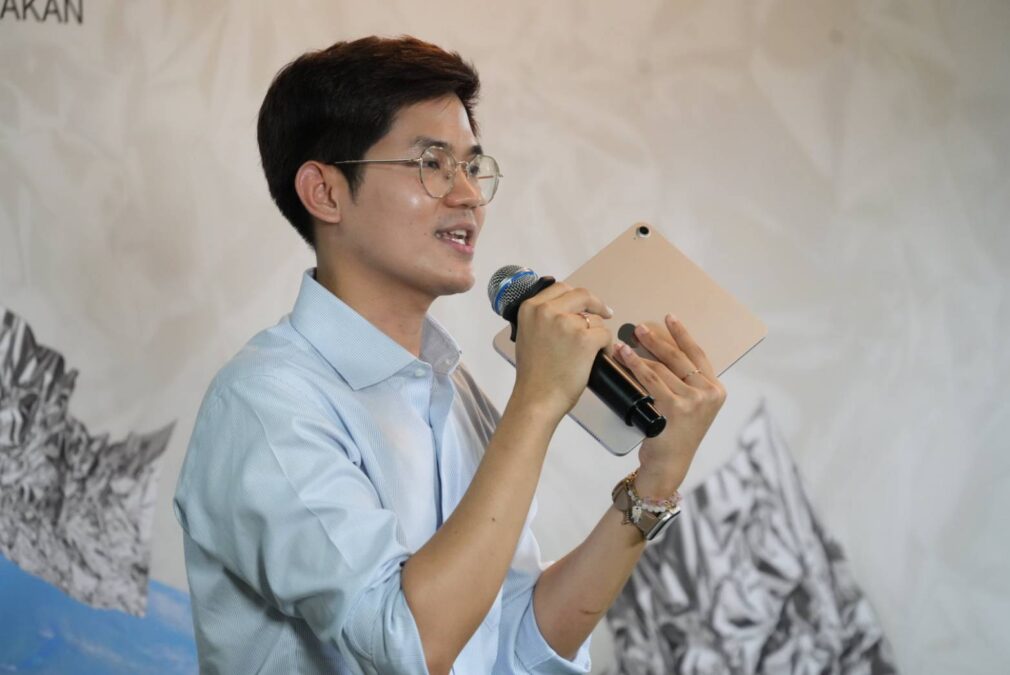
Mr. Sikkarin Themiyakul, Ph.D., co-founder of CIRAC, added, “We see this problem as an opportunity because the plastic waste contains aluminum, a high-value metal. If we can separate the aluminum, it means we can turn low-value waste into high-value products that can grow in terms of business. Companies that use aluminum plastic packaging are interested in solving the waste problem from such packaging. CIRAC itself is a Solution Provider for these companies in solving this problem. We expect that if this project successfully expands commercially, there will be a net profit from selling recycled aluminum, estimated at $140 – $340 per ton, making it highly profitable. Additionally, it addresses the problem of mixed plastic-aluminum packaging waste, which no one has been able to sustainably manage at the community and national levels. Furthermore, it can reduce the release of greenhouse gases from the aluminum production process and reduce aluminum imports from abroad.”
From the research conducted by the team, it was found that plastic waste in Thailand containing aluminum amounts to approximately 50 tons per day, which is enough to produce up to 150 cars. If we can recycle this aluminum back into industrial use, it could significantly increase the value in the aluminum industry. This would eliminate the need to import aluminum from foreign countries and utilize recycled aluminum from our own waste. The aluminum market in Thailand has a high value of up to 2 billion US dollars. However, Thailand is not a country capable of producing aluminum on its own; we have to import 100%. If we consider only the aluminum embedded in items like snack bags, coffee sachets, milk cartons, various fruit juice boxes, which cannot be recycled and reused, its value amounts to 35 million US dollars.
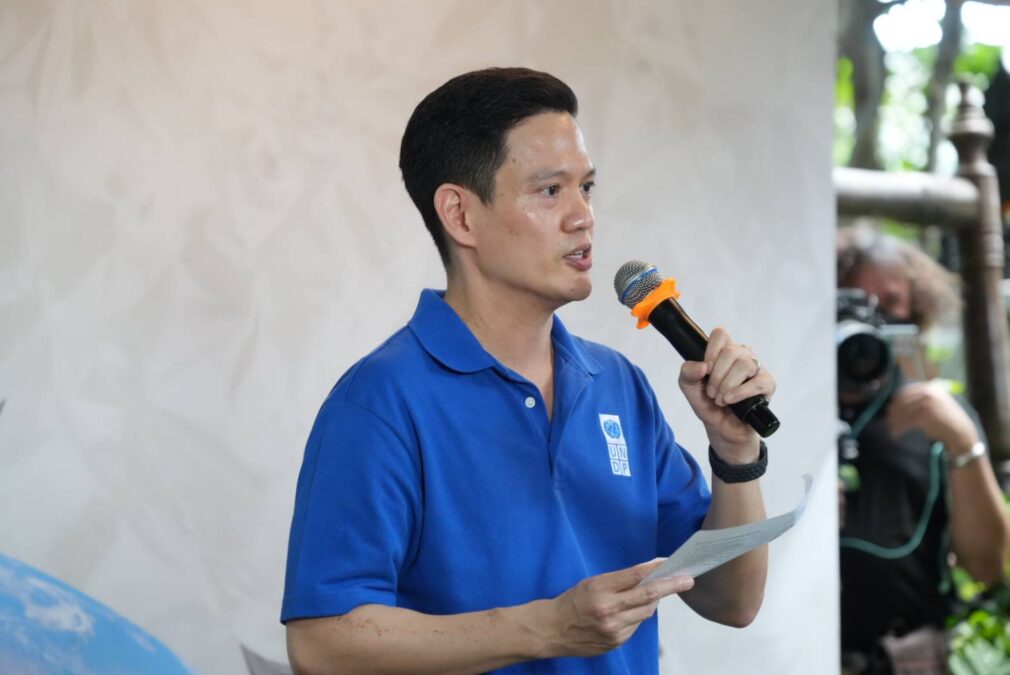
Mr. Kan Ramintra, Integrated Team Leader at UNDP Thailand, stated, “For UNDP is like the first mentor for CIRAC and having PMUC as the second mentor. This project is crucial in managing waste in the Jakdang temple community, including waste floating in water before reaching the sea. UNDP’s main role in Thailand is to promote sustainable development in line with the Sustainable Development Goals (SDGs). Currently, we have more than 20 projects in Thailand, and one of the most important issues for us is waste management or Circular Economy. We found that in one year, Thailand disposes of 15 million tons of waste, with plastic constituting up to 11% of that. This plastic waste can be found along the Chao Phraya River. Furthermore, these plastics cannot be efficiently recycled; only about 20% can be recycled systematically. Therefore, we are striving to increase this percentage, and we hope that if this technology can be implemented on a commercial scale, it has the potential to significantly reduce waste.”
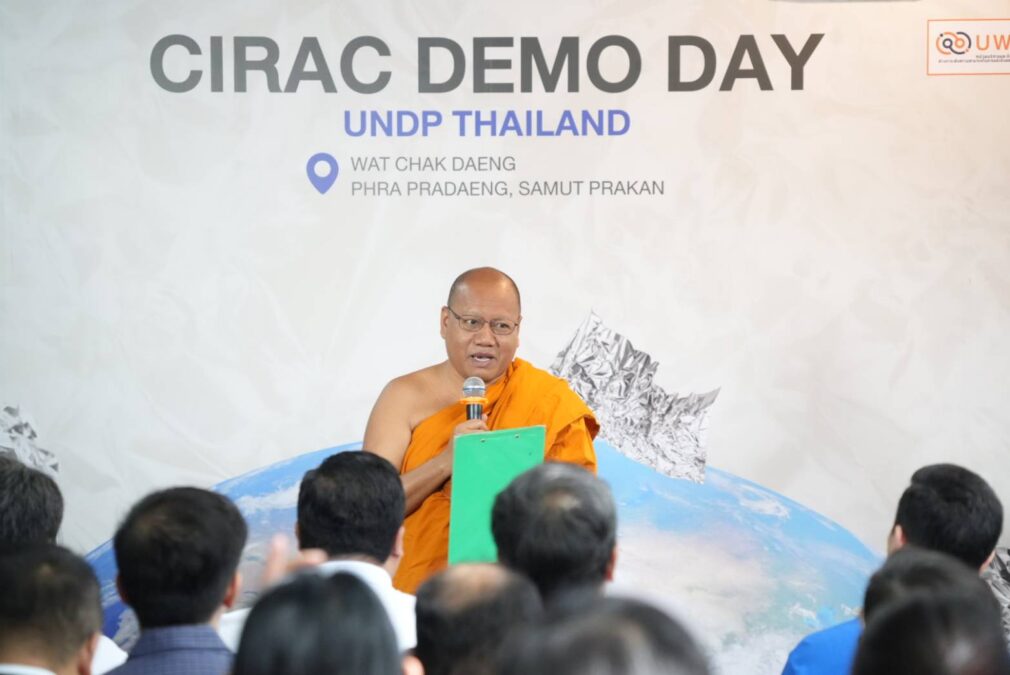
On the side of the Venerable Prarajawatcharabundit (Pranom Thammalongkaro), the abbot of Wat Jakdang, spoke about the management of waste in the temple and cooperation in this project as follows: “Wat Jakdang has been managing waste with the community since 2005. Previously, incineration was used, which caused odor and pollution, so we found a way out by turning food waste into compost. As for plastic waste, such as curry bags, which came in large quantities from alms giving, we have processed them into oil using a pyrolysis machine made by the temple itself. Additionally, the temple has also installed traps to catch floating waste before it flows into the Gulf of Thailand, using ordinary boats available at the temple for trapping. It was found that up to 2 tons of waste could be trapped per hour. Afterwards, the trapped waste was sorted. Initially, training was provided to novice monks in the morning and evening every day. Then the project was expanded to the villagers in the community. The waste management project of the temple has gradually grown with cooperation from both the government sector, especially sub-districts and districts with waste management policies, and the private sector. Currently, there are 36 companies participating in the waste management project with Wat Jakdang. Additionally, the temple has cooperated with CIRAC to solve the problem of managing waste in the group of snack packaging which contains aluminum sheets. Previously, we didn’t know how to manage waste from this group because it contains aluminum. If it were purely plastic bags, they could be incinerated to produce oil. However, with aluminum mixed in, it couldn’t be processed that way as it would leave residual metal. Moreover, recycling this type of waste was difficult because we didn’t have the technology to separate aluminum components from plastic. But now, CIRAC has developed pyrolysis furnace technology that can handle this waste group by converting it into aluminum and fuel oil. Therefore, Wat Jakdang has collaborated with CIRAC to provide space for setting up pyrolysis machines and has worked with the community to manage waste from snack packaging. It is believed that this project will be greatly beneficial in addressing the persistent problem of plastic waste in the area and will expand to the regional and national levels in the future.”
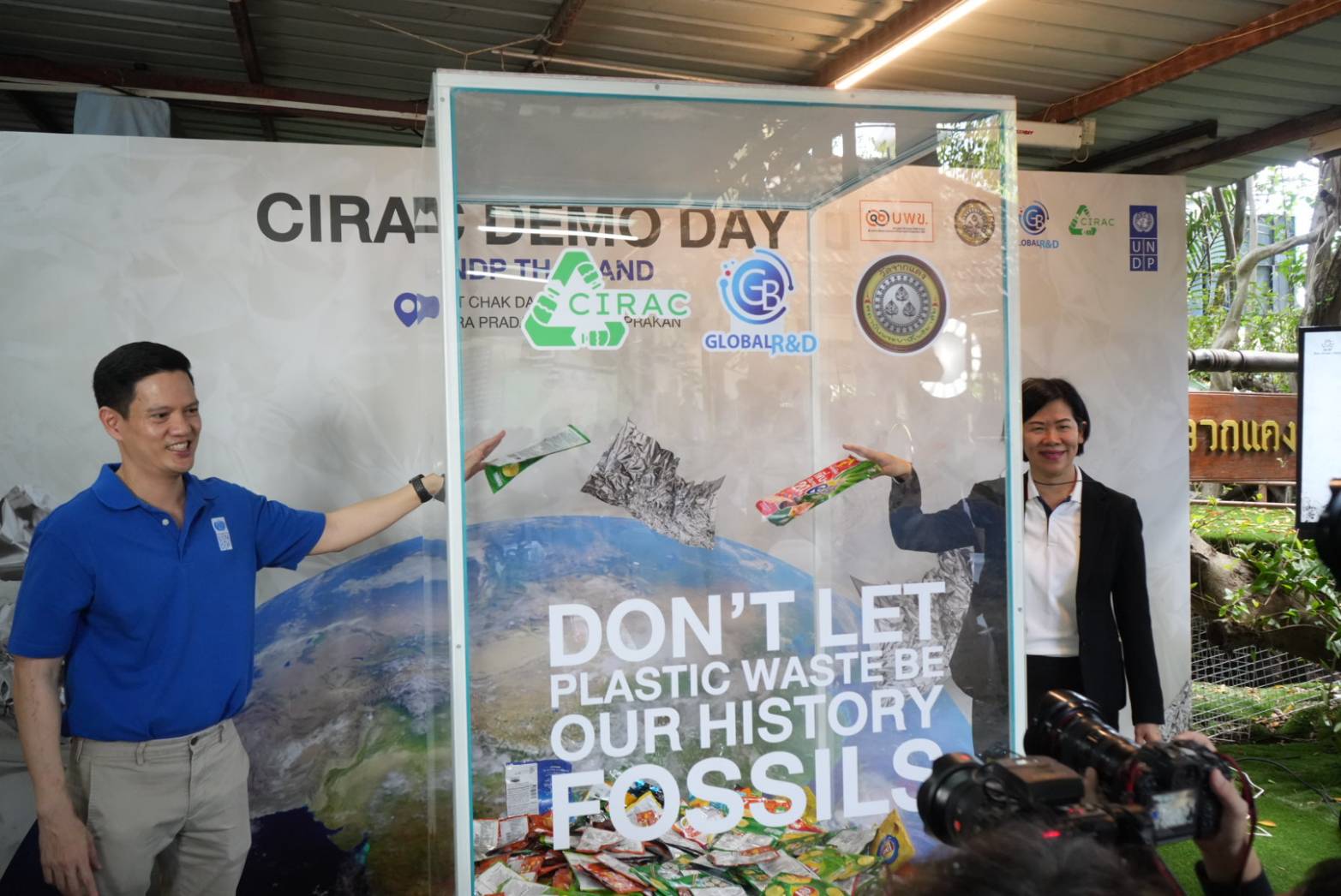
Thailand is ranked 6th in the world for releasing plastic waste into the environment. Currently, recycling plastic waste such as PET bottles or plastic food bags is not difficult through chemical processes to reuse or change its form for other purposes. However, the focus of this project is on managing the problem of plastic waste in the group called “Aluminum Plastic Packaging,” which is packaging with an aluminum layer sandwiched between plastic layers, also known as Laminated Plastic. This makes recycling difficult and unsellable, becoming an environmental problem. However, the use of this type of packaging is widespread due to its properties that help maintain the freshness of the food inside, commonly found in markets such as milk cartons, snack bags, coffee sachets, commonly found in supermarkets and general stores or so-called “flexible pouches.” It cannot be denied that this type of packaging remains necessary and its demand continues to increase by more than 10% annually. Therefore, it is necessary to find ways to manage this waste to avoid long-term environmental impacts. Recycling aluminum from this waste will help solve the problem of environmental pollution and also reduce greenhouse gas emissions from mining and aluminum production processes.