PMUC, under the TSRI Fund, joined with businesses, researchers, and tourism partners from Thailand to participate in WTM 2023 convention in London, aiming to attract high-quality tourists with a focus on sustainable tourism.
Program Management Unit for Competitiveness (PMUC), the Thailand Science Research and Innovation Fund (TSRI), and the Ministry of Higher Education, Science, Research and Innovation (MHESI) have joined with the Tourism Authority of Thailand (TAT), tourism businesses, researchers, and tourism partners from Thailand in attending the WTM 2023 Convention from November 6 to 8, 2023, at Excel London, London, United Kingdom. WTM is a global tourism trade fair and the most significant event in the UK, with a year history. The event aims to attract high-spending, long-staying quality tourists from the European market who value responsible and environmentally friendly tourism, in line with government policy.
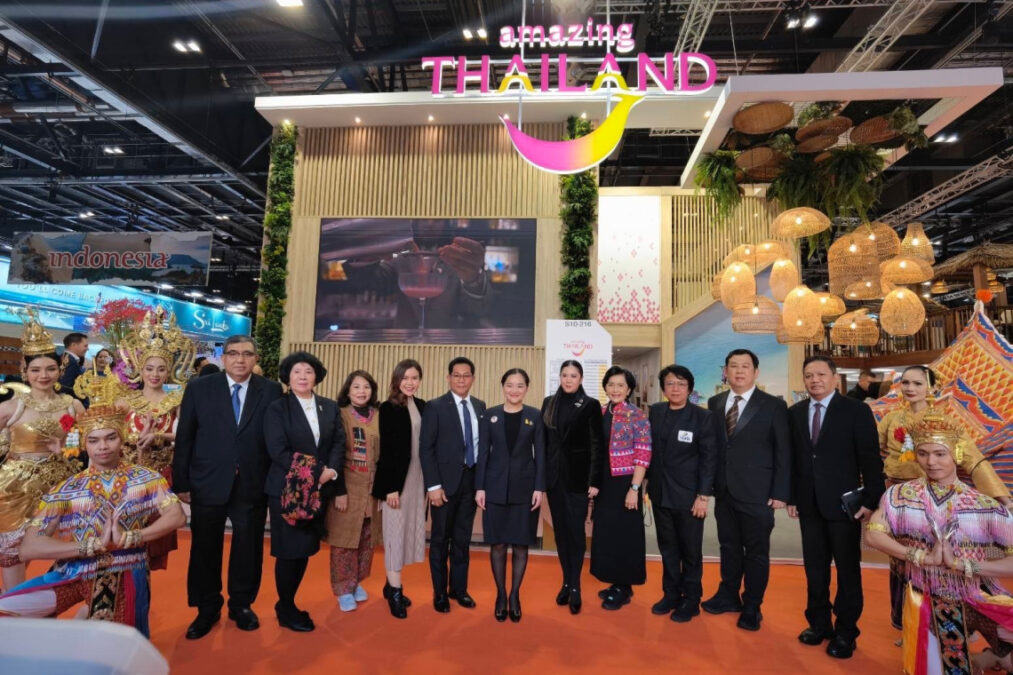
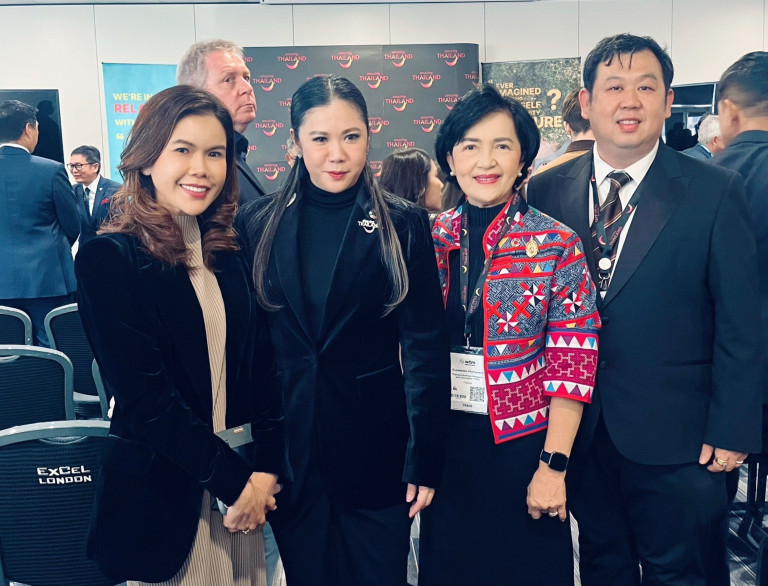
From November 6 to 8, 2023, Asst. Prof. Supavadee Pothiyarach, senior expert at TSRI and Chairperson of the Tourism and Creative Economy Subcommittee on, led a team of researchers focusing on high-value tourism, health tourism, and long-stay tourism, at the invitation from the Tourism Authority of Thailand (TAT) and TAT’s London Office, to atten the WTM 2023 Convention. The delegation included executives, researchers, and Thai tourism business operators.
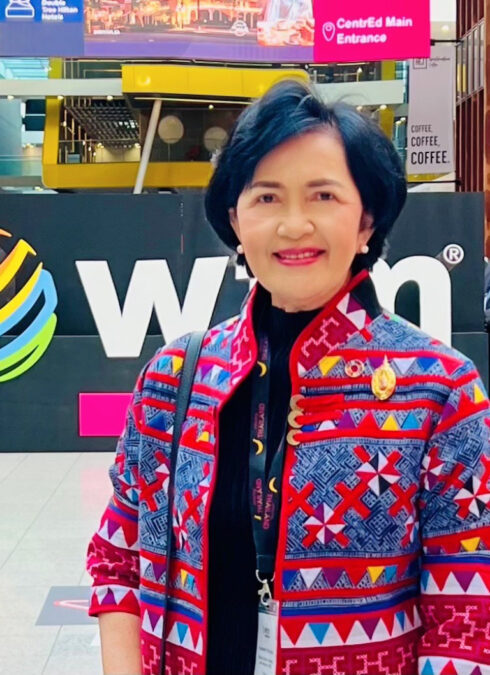
Asst. Prof. Supavadee Pothiyarach, senior expert at TSRI and Chairperson of the Tourism and Creative Economy Subcommittee at PMUC, stated that the Thailand Science Research and Innovation Fund (TSRI), which is responsible for developing science, research, and innovation plans that align with the country’s strategic plans and allocating budgets focused on research utilization, currently oversees nine management units. Additionally, it allocates research funding from the TSRI to universities and various ministry/department-level agencies, totaling approximately 190 units which have received such funding. One of these is the Program Management Unit for Competitiveness (PMUC) led by Associate Professor Thongchai Suwansichon, Ph.D., as its director. The Tourism and Creative Economy Program at PMUC has a crucial mission to drive the country’s tourism economy. The five-year science, research, and innovation plan for tourism and creative economy (2023-2027) aims to attract high-quality foreign tourists to visit and stay in Thailand for at least 10 days, with an expenditure of approximately 5,000 baht per person per day. Importantly, this target exclusively applies to foreign tourists and does not include domestic tourism. This necessitates collaboration with the private sector. Currently, there are over 1,000 researchers from various universities, each with different areas of expertise. Collaborating with the private sector can significantly drive the country’s tourism economy. For example, the Thai Ecotourism and Adventure Travel Association (TEATA) and the Association of Thai Travel Agents (ATTA) are willing to co-invest (In cash) at 12%-15% of the budget supported by PMUC.
The agreement involves collaboration towards common goals, such as jointly setting the criteria for delivery of research results. This includes indicators related to the economy, national income, and entrepreneurs’ income, focusing on collaborative efforts. Regarding Carbon Neutral Tourism, we have received significant support from the TEATA association. They have utilized research products, goods, and services to co-design actual tourism programs/activities for sale. Since 2021, we have collaborated with eight partner organizations: TGO, TAT, TCEB, DASTA, the Thai Chamber of Commerce and its associated chambers, and TEATA. The TGO, or the Thailand Greenhouse Gas Management Organization, provides technical support in measuring carbon emissions, reduction, and offsetting. Currently, PMUC has developed the “ZERO CARBON” application to assess greenhouse gas emissions and carbon offsetting from tourism activities/programs and the MICE industry, aiming for carbon neutrality or net-zero carbon. The success of these efforts will be announced on November 23.
Asst. Prof. Supavadee added that the PMUC’s Tourism and Creative Economy Program is divided into four groups. The first group focuses on eco-friendly nature tourism, striving for net-zero carbon. We are still in the stages of measurement, reduction, and offsetting, with expectations that by 2025-2026, TEATA, in collaboration with researchers, will design the Net Zero Emission Route program with support from a network of entrepreneurs. The second group emphasizes health tourism, including SPA and SPORT activities like boxing, cycling, running, and golf. This year, Thai boxing, a leading Soft Power of Thailand, has successfully entered the metaverse boxing arena. The third group focuses on policy research to enhance Thailand’s tourism competitiveness by addressing certain limitations and proposing urgent policy solutions, such as the impact of COVID-19 on the tourism economy, including overall economic effects, entrepreneurs, and tourism and service industry workers. This also includes tourism for all (the elderly, people with disability, those with limited access to tourist attractions, and those needing health care combined with tourism). This group includes Nattys Adventure, which won the 14th Thailand Tourism Awards in 2023, showcasing impressive inclusive tourism routes from research outcomes. The fourth group is the creative economy, aligning with Soft Power and sustainable government policy.
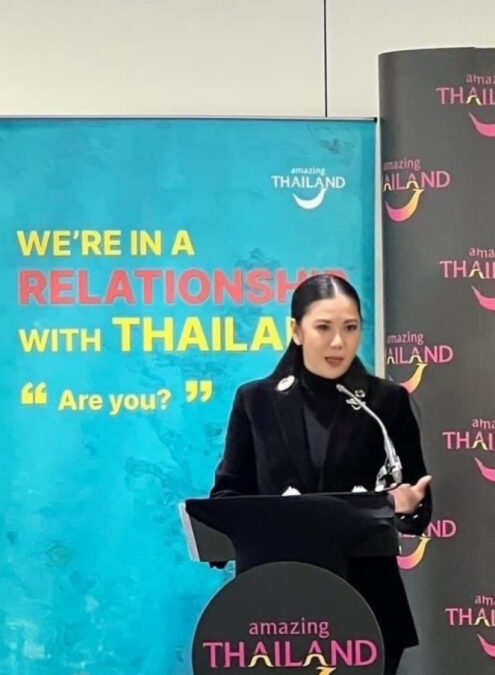
Ms. Thapanee Kiatphaiboon, Director of the Tourism Authority of Thailand (TAT), revealed to foreign reporters during TAT’s press conference at WTM 2023 that “By participating in this year’s WTM, TAT has launched the ‘Meaningful Relationship’ campaign. This international marketing campaign aims to build meaningful relationships with people, local communities, nature, and even the travelers’ inner selves, making their journeys valuable and memorable experiences. Additionally, TAT aims to reinforce Thailand’s image by elevating the tourism industry towards sustainable tourism. We present tourism products and services from operators who prioritize environmentally friendly business practices and collaborate with partners to offer Carbon-Neutral travel routes to the European market. Responsible tourism is a growing trend among travelers. Through the ‘Carbon Neutral Tourism in Thailand by TEATA & Tourlink’ initiative, 25 tourism businesses were invited to present over 20 travel routes under the ‘Adapt, mitigate, offset’ concept to the European market.”
Ms. Wasumon Natekitjaroen, President of the Thai Ecotourism and Adventure Travel Association (TEATA), stated that the association, which has been around for about 25 years, consists of travel companies, hotels, and outdoor activity providers. These private sector tourism operators have consistently promoted ecotourism and adventure travel with a focus on sustainability. It is a significant opportunity for operators like us to receive academic support through research processes funded by PMUC and TSRI. This guidance has directed us towards net-zero carbon tourism over the past 3-4 years. Starting with no prior experience in Thailand, we approached the Thailand Greenhouse Gas Management Organization (TGO), as there was no carbon offsetting in tourism in Thailand. This led to the research concept initiated in Nan province in 2021, marking the beginning and giving rise to the ‘Measure, Mitigate, Offset, and Share’ process. ‘Measure’ refers to assessing carbon dioxide emissions. In 2022, we applied this process to design travel routes and tested them to ensure credibility and effectiveness. We collaborated with TGO as mentors, acquiring knowledge and developing over 50 prototype routes to enhance and elevate them. This year, 2023, we worked with Tourlink, a European organization focused on sustainable tourism. They use Camacal as a tool to measure carbon dioxide emissions from tourism activities on an international level, analyzing travel modes, accommodation, and other related activities. Additionally, we worked on PCRs (Product Category Rules) to create specific guidelines for accurately and consistently assessing the greenhouse gas emissions of each product.
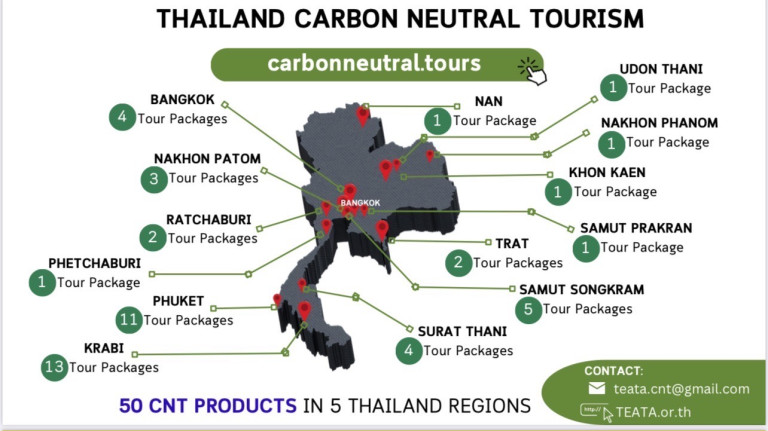
On this occasion, Tourlink, represented by Mr. Peter Richards, Project Manager at TOURLINK Project (SWITCH ASIA), invited tour operators in Europe to collaborate on marketing initiatives. Among the seven highlighted routes being actively marketed and the thirteen routes developed through research by the PMUC, all are proven to be marketable. These existing routes have been adapted to become CNT (Carbon Neutral Tourism), allowing TEATA operators to confidently promote them. This is especially relevant as the European and British markets are increasingly focused on sustainability. At the WTM 2023 event, there was significant interest from approximately 35 companies, both those who contacted online and those who visited the booth. The TEATA committee members who participated in this trip included Mr. Niphatpong Chuanchuen, Ms. Parichat Soonthararak, Ms. Supawadee Ritvirun, Ms. Kusuma, and Mr. Itthirit Kinglek, as TEATA members.
The president of TEATA further added that, previously, carbon offsetting required purchasing programs from abroad. However, for the first time in Thailand, there will be a platform for carbon credit offsetting, supported by the PMUC. They have developed an application called “Zero Carbon” that allows calculations to be done on mobile devices and provides complete certification. This is another significant step for the Thai tourism industry.
Nithi Sueppongsung, CEO of Nutty’s Adventures Ayutthaya Boat, from the Association of Thai Travel Agents (ATTA), stated that during the business negotiations at WTM2023 LONDON, overall, we met with representatives from 49 partner companies. Thirteen of them showed interest in the concept of Tourism for All, which is the main program that Nutty’s Adventures promoted at this event, focusing on Destination for All. This is part of research supported by the Program Management Unit for Competitiveness (PMUC) and the TSRI continuously. From discussions with business partners, it is clear that European tourism operators have confidence in Thailand’s systematic approach to promoting Tourism for All through collaborative research efforts between government, private sector, and academia. This continuous collaboration and commercializing research is crucial. The model promoted by PMUC benefits the country in tangible ways, as it involves in-depth cooperation both academically and professionally, leading to faster, more flexible and comprehensive operations.
Additionally, Assistant Professor Supavadee led a team of executives, research directors, and researchers in discussing the promotion of marketing and related aspects at WTM London 2023 with Ms. Thapanee Kiatpaiboon, Director of the Tourism Authority of Thailand (TAT), and Mr. Siripakorn Cheawsamoot, Deputy Director of TAT for Europe, Africa, the Middle East, and the Americas. The TAT requested that the PMUC, which is strong in academic/research on tourism and the creative economy, support research to determine the Thailand Tourism Carrying Capacity to achieve the government’s target of accommodating a large number of quality tourists. This aims to create a balance between incoming tourists and the readiness of operators, starting from major tourist attractions, including in-depth information about foreign tourists such as their styles, preferences, and spending habits. Furthermore, senior TAT executives suggested research topics for developing information on new tourist destinations and activities to educate foreign tour representatives before testing the tourism routes in the next phase. This marks a critical research agenda that PMUC must promptly support for the country’s key agencies.
On the third day of the event, TAT provided a platform for PMUC researchers and TEATA entrepreneurs to connect long-stay tourism and health tourism routes, including net-zero carbon tourism with the European market. The researchers presented information on Thai Wellness Andaman, examples of wellness tourism activities and programs, and Thailand Carbon Neutral Tourism and Agro Tourism to tour representatives and organizations in the UK and Europe. They had the opportunity to exchange opinions and suggestions on the operations. The research team included Professor Wipada Kunaviktikul, Ph.D., from Panyapiwat Institute of Management and Director of the Health Tourism Program at PMUC, Associate Professor Thammasak Yimin, Ph.D., from Ramkhamhaeng University, Director of the Natural and Net-Zero Carbon Tourism Program at PMUC, Associate Professor Siwarit Phongsakornrangsil, Ph.D., and Assistant Professor Pimlapas Phongsakornrangsil, Ph.D., from Walailak University, specializing in long-stay tourism, and Associate Professor Dr. Peerasak Chaiprasat from Naresuan University, specializing in agro-tourism. They were joined by Mr. Itthirit Kinglek and Ms. Kusuma Kinglek, owners of Ao Nang Princeville Resort and Spa in Krabi, the first hotel in Thailand to receive the WellHotel health service standard at the World Class level. Also present were Assistant Professor Anapat Nongkhu, coordinator of the Tourism and Creative Economy Program at PMUC, and Ms. Parichat Soonthararak, Vice President of the TEATA, who moderated the session and provided an overview of the current CNT (Carbon Neutral Tourism) initiatives.
Dr. Chatthavee Kongdee, Assistant Director of the Fund Development and Strategic Communication Office at the TSRI, added to the discussion about the role of the SRI Fund. The Science, Research, and Innovation Promotion Fund, managed by TSRI, is responsible for promoting, supporting, and driving the country’s science, research, and innovation system in all aspects to achieve balanced and sustainable national development.
Assoc. Prof. Patamavadee Pochanukul, Ph.D., Director of TSRI, is ready to support and cooperate with the private sector and entrepreneurs in all dimensions to apply research and innovation knowledge for practical benefits. This aims to enhance and elevate the competitiveness of Thai entrepreneurs for sustainable growth. This will be a crucial factor in creating added value through economic innovation, improving the Thai economy for a stronger Thailand by using science, research, and innovation as the driving mechanism.