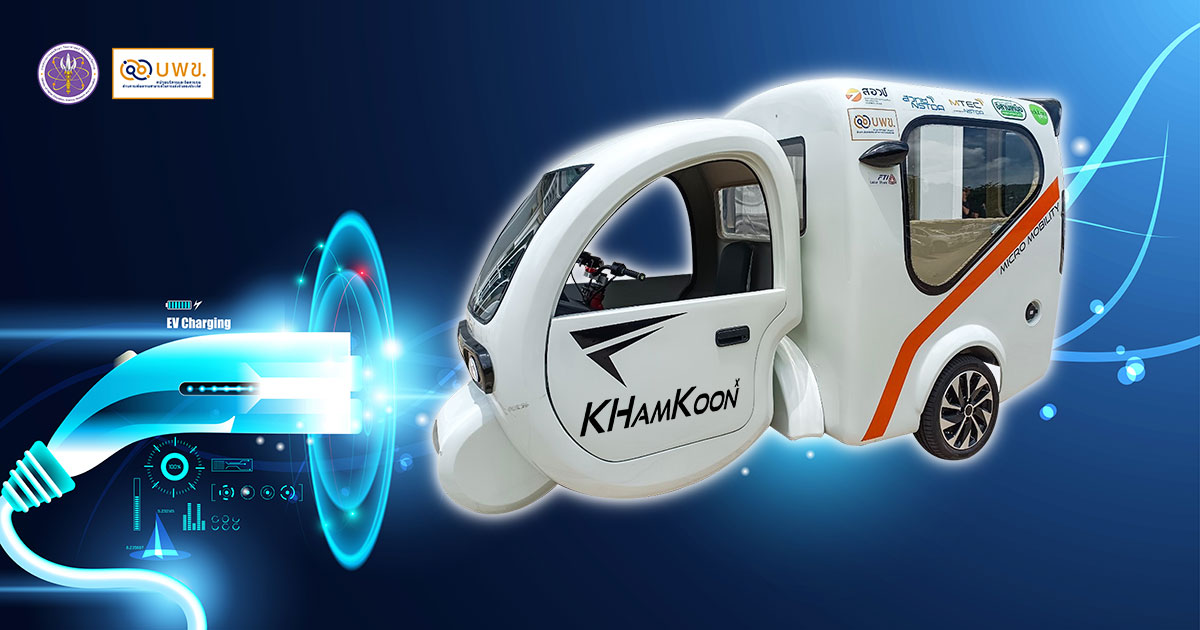
The trishaw (tricycle + rickshaw), or sometimes called pedicab, is one of the modes of transportation deeply connected to the way of life of Thai people, especially in rural areas. One of the most popular forms of public transportation is the ‘Skylab,’ a motorized tricycle with an internal combustion engine. However, as the world faces heat waves and the development of electric vehicles (EVs) begins to replace combustion engines, Thailand has developed modern, stylish, and eco-friendly EV tricycles called ‘KHamKoon,’.
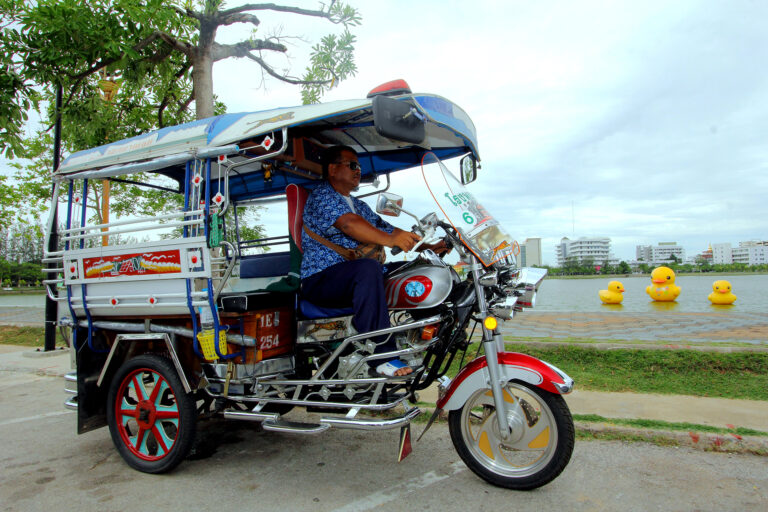
The KHamKoon EV tricycle was developed by the National Metal and Materials Technology Center (MTEC), part of the National Science and Technology Development Agency (NSTDA), through the Rail and Modern Transport Technology Research Group (RMT), in collaboration with E-SARN Technology Co.,Ltd, and the E-SARN Technological College in Udon Thani, with funding support from the Program Management Unit for Competitiveness (PMUC), under the Ministry of Higher Education, Science, Research, and Innovation (MHESI). The project aims to meet the needs of the new generation, who desire modern, safe, and environmentally friendly transportation.

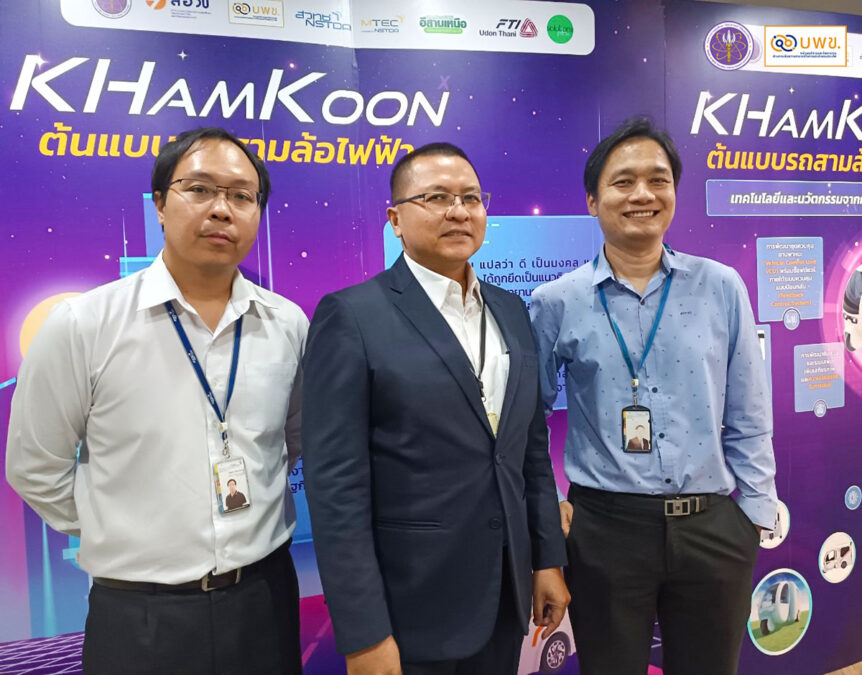
Dr. Ekkarat Wainit, Director of the Rail and Modern Transport Technology Research Group at MTEC, NSTDA, explained the origins of the project. The ‘KHamKoon’ tricycle was developed with the idea of being a new public transportation option for Udon Thani, which is growing and preparing for the future Thai-Chinese high-speed rail project. But, to succeed, the project needed to be different from others; if it were just like everyone else’s, it wouldn’t advance very far. One key figure in the project is Mr. Vikrom Watcharakhup, Vice President of the Thai-Lao Business Council, who often travels to Udon Thani for work and is familiar with the local industry. He suggested working together with the Udon Thani industrial sector. I proposed developing a tricycle because people in the area favor the Skylab tricycles. However, there are issues with safety and modernity, which may not meet the expectations of the new generation. From an engineering standpoint, there are also many areas for improvement. Moreover, Udon Thani is a strategic province, a key hub connecting to Laos, and one of the stations where the Thai-Chinese high-speed rail will stop before crossing into Laos at Nong Khai. With the arrival of high-speed rail, the city will need to adapt, which led to the birth of this project.
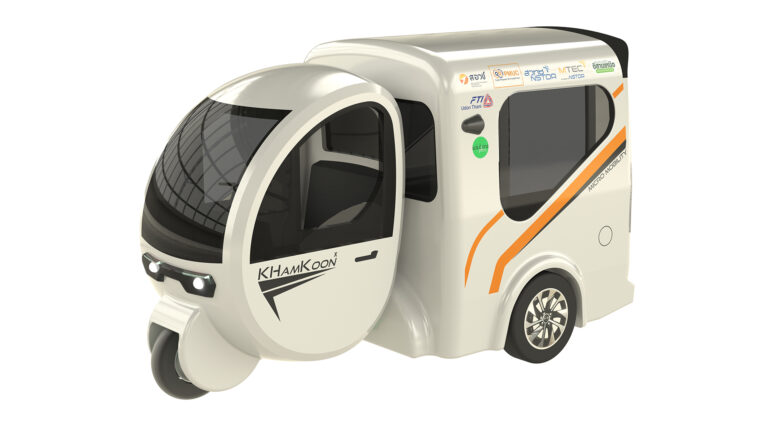
“For the people of Udon Thani, the city’s development strategy revolves around the keyword ‘walkable city,’ meaning that people won’t need personal vehicles for travel, instead using public transportation. So, what kind of public transport fits a compact city like Udon Thani? The answer is micro-mobility. We had the opportunity to speak with the Skylab tricycle manufacturers in Udon Thani, the Udon Thani Federation of Industries, and the E-SARN Technology College, which emphasizes innovation and knowledge development. They saw the development of the KHamKoon EV tricycle as an opportunity for the students at E-SARN Technology College to learn about modern automotive innovation. With private sector involvement, we designed the EV tricycle, developed the designs, technologies, and prototypes. Afterward, we wrote a proposal and applied for research funding from PMUC, which was approved. The private sector, represented by the E-SARN Technology College, contributed 10% of the research funding and provided their facilities to develop the KHamKoon tricycle prototype,” Dr. Ekkarat said.
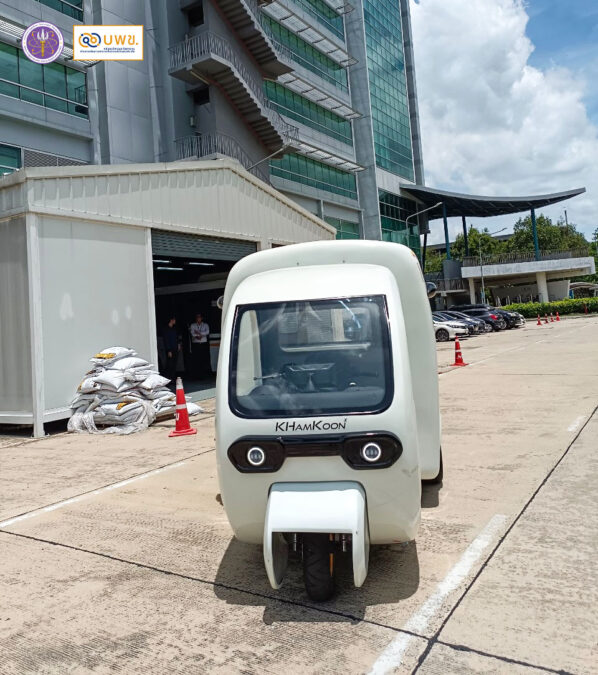

The KHamKoon prototype project began in September 2022 and is set to conclude in March 2024. It has been made possible through modern research that has real commercial applications. The project connects various networks, including government agencies, local administrative organizations, entrepreneurs, and professional associations related to the future transportation industry, to exchange perspectives and business development strategies within the context of the green economy. It also aims to develop the supply chain for this industry to grow sustainably. This is another innovation that answers the need for modern, environmentally friendly public transportation, aligned with concept of the city of the future.
However, the main goal of this project is not just to produce and sell electric tricycles, but to use the KHamKoon tricycles as a tool for developing the local economy and grassroot industries. The aim is to involve local people in production, tourism, services, and to drive GDP growth from upstream to downstream.
“We must thank the Program Management Unit for Competitiveness (PMUC) for their excellent vision and support of research that can be linked to industry for practical use. Future transportation is one of the key drivers pushing Thailand to adopt electric vehicles (EVs), in line with the 30@30 policy, and to develop smart cities, particularly in terms of smart mobility and transportation.”
– Dr. Ekkarat Wainit
Director of the Rail System and Modern Transport Technology Research Group, MTEC, NSTDA.
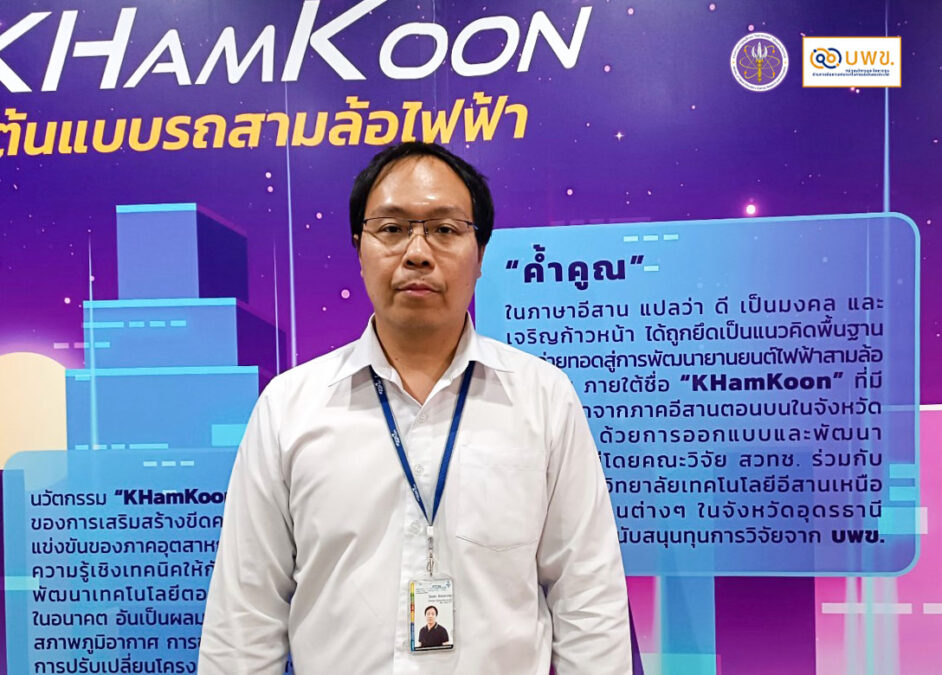
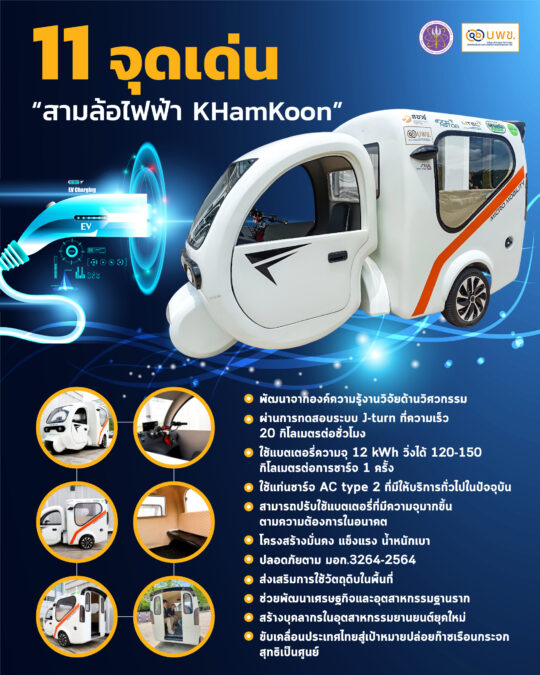
Dr. Wanlop Rattanathavorn, a researcher in the Production and Maintenance Technology Research Team at the Rail System and Modern Transport Technology Research Center, MTEC, NSTDA, spoke about the research and development process. He explained that conventional three-wheelers have a center of gravity near the front wheel, which makes them prone to sliding, lifting a wheel, or flipping over when cornering at high speed. Therefore, the research team applied their expertise in drive systems and electronics to design a system that increases stability when cornering. The unique technology they developed is a “drive control motor that independently controls each wheel based on automatic driving conditions.” Performance and safety tests demonstrated that drivers can perform a J-turn (a quick U-turn) at 20 kilometers per hour safely, meeting the international standard TIS 3264-2564.
The key design elements of the KHamKoon tricycles can be summarized in three main areas:
Electric drive system – In line with current trends, the combustion engine is replaced with an electric system.
Engineering design – The vehicle was engineered to be stable, strong, and lightweight, while promoting the use of local materials.
Safety and handling – Given the nature of three-wheelers, which often need to turn in narrow spaces, they are prone to tipping, sliding, or lifting a wheel. The team used engineering knowledge to solve these structural issues, ensuring the vehicle passed international safety standards.
– Dr. Wallop Rattanathavorn
Researcher in the Production and Maintenance Technology Research Team, Rail System and Modern Transport Technology Research Center, MTEC, NSTDA.
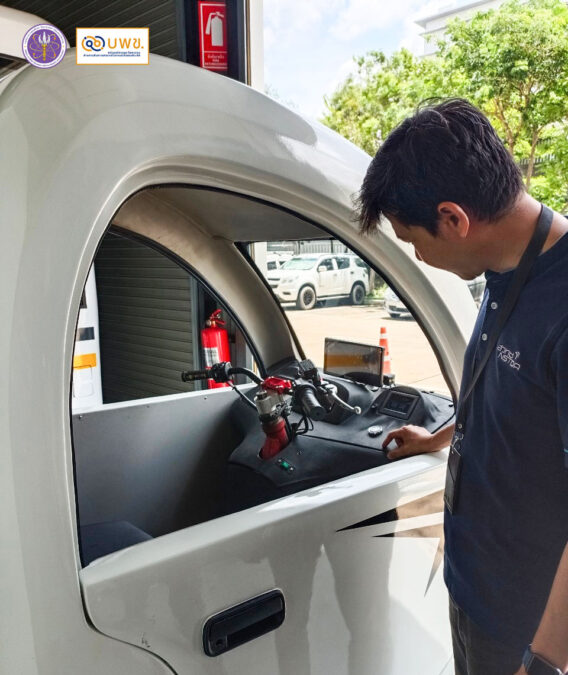
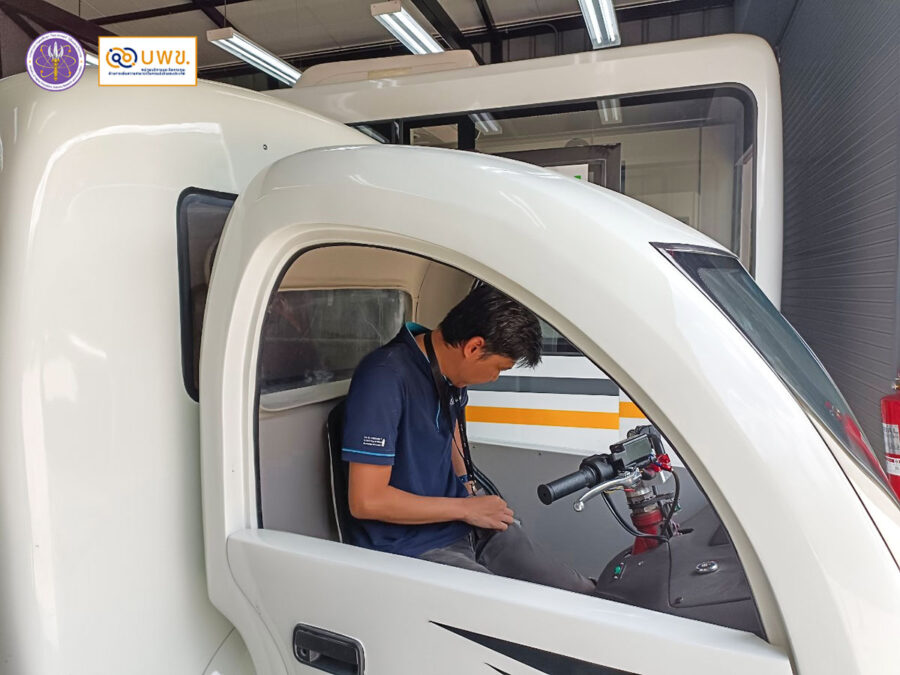
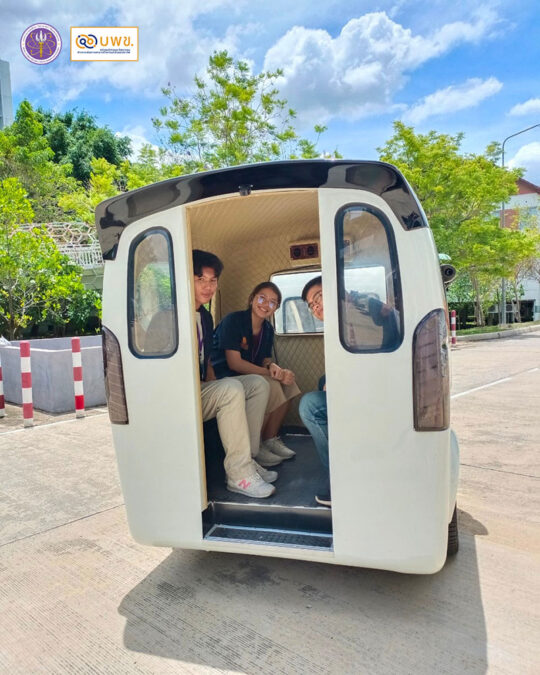
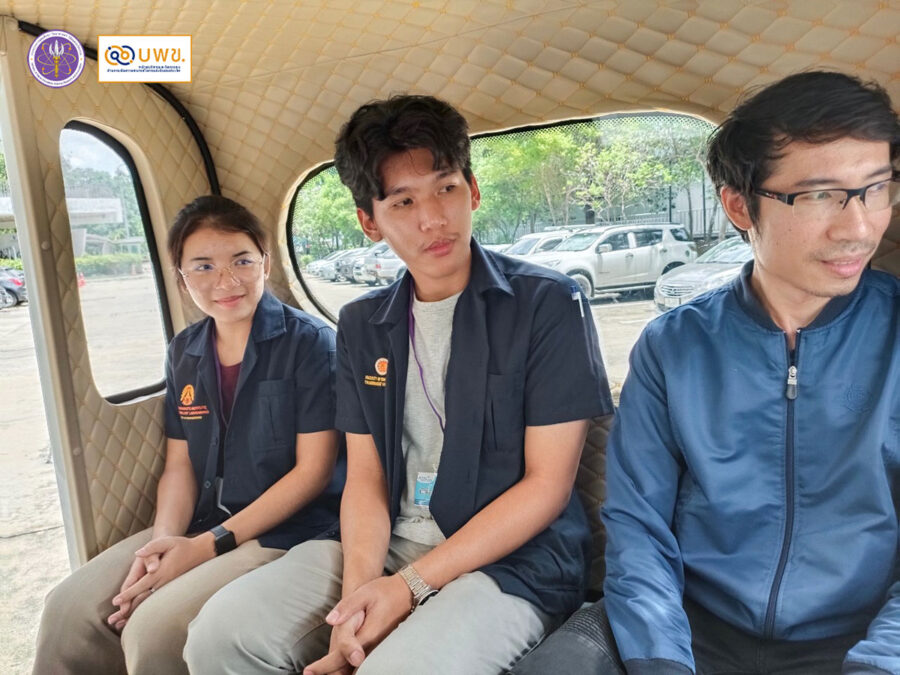
Regarding the vehicle structure, the research team specializing in structural analysis, within the same research group, redesigned the vehicle to retain the basic outline of the traditional Skylab (tuk-tuk) while making it more modern, durable, and safer for use. The team applied finite element analysis principles to calculate and analyze the product’s strength, alongside using vehicle simulation technology to model the vehicle. The result is a design for a structure that can enhance passenger safety.
As for environmental friendliness, the research team replaced the internal combustion engine with an electric vehicle (EV) system. The KHamKoon was designed to use a 12 kWh battery, allowing it to travel 120-150 kilometers per charge using an AC Type 2 charger, which is widely available today. Additionally, the vehicle can be upgraded to use higher-capacity batteries and fast charging if there is demand in the future.
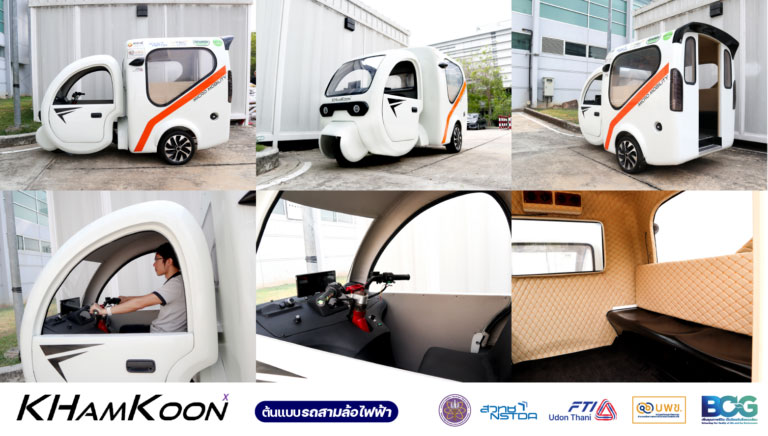
The research team has already delivered the first prototype of the KHamKoon to the Udon Thani Provincial Industrial Council. Initially, the council plans to use the KHamKoon prototype in a “sandbox” project, providing transportation services for passengers within Udon Thani Central Hospital and between the hospital and parking lots located 1-2 kilometers away. This will help alleviate traffic congestion within the hospital and surrounding areas. The council is also working on preparing infrastructure, such as parking areas for the vehicles, charging stations, and a mobile app for booking rides, to make public transportation within the province more convenient.
At the same time, efforts are underway to develop a skilled workforce in collaboration with the E-SARN Technology College. This includes upskilling and reskilling personnel involved in EV production and maintenance, under the concept that local people should be able to produce and maintain the vehicles themselves. Once the KHamKoon tricycles reach the commercialization stage, it will be priced affordably to support sustainable long-term industry, in line with the Next-Gen Automotive Industry Promotion Plan, which aims to drive Thailand towards carbon neutrality by 2050 and net-zero emissions by 2065.