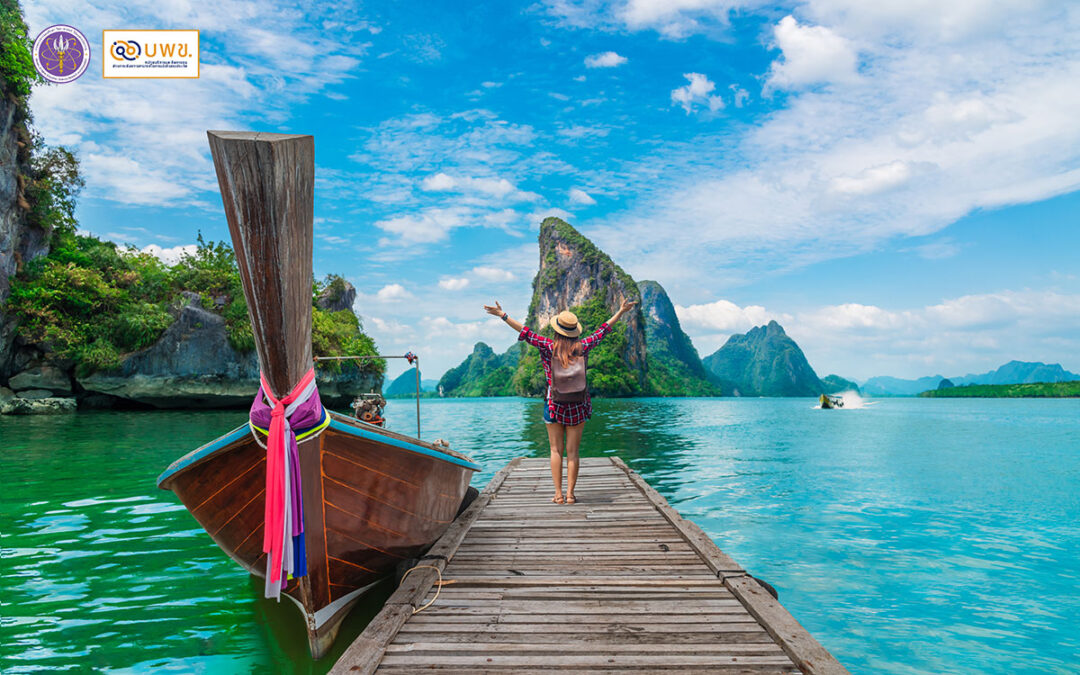
According to data from the Ministry of Tourism and Sports, it is clearly stated that in 2022, Thailand has significant potential for further tourism development, especially in advancing coastal tourism along the Gulf of Thailand and the Andaman Sea, spanning over 3,000 kilometers. In 2022, the total revenue from tourism amounted to as much as 1.21 trillion baht.
In the Andaman coastal areas of five provinces—Phuket, Krabi, Phang Nga, Trang, and Satun—there were 29 million visitor entries in 2022, generating revenue of 600 billion baht, almost twice as much as the coastal areas in Thailand’s eastern region, with an average spending of 4,800 baht per person per day, the highest among the five clusters of coastal tourism in Thailand.
Meanwhile, in the coastal areas of four provinces—Surat Thani, Nakhon Si Thammarat, Phatthalung, and Songkhla—there were 18 million visitor entries, both Thai and foreign, generating revenue of 180 billion baht in 2022, or an average of 2,861 baht per person per day. These areas have a variety of unique selling points, such as spiritual tourism and natural tourism. Recently, the special area of Songkhla Lake Basin has been declared for sustainable tourism.
This statistical data clearly indicates that all parties involved in the development of Thai tourism need to prioritize proactive coastal tourism development in all dimensions. If successful, it could serve as a model to be adapted for overall Thai tourism, leading to sustainable development, especially driving toward the goal of Net Zero Tourism.
To ensure all parties can share a vision of success in developing Thai tourism, it is crucial to open up opportunities for everyone to participate—from the government, the private sector, and local communities to tourism operators, research institutions, and academia aiming to implement research results in actual tourist areas and communities across Thailand. We had the opportunity to speak with Mr. Oliver Kittipong Veerataecha, Chief Marketing and Innovation Officer of Dentsu Thailand, who is a globally recognized expert in crafting strategies and marketing planning. He has utilized his knowledge and experience to collaborate with various sectors to turn crises into opportunities, pushing Thai tourism forward with the best image to project to the world.
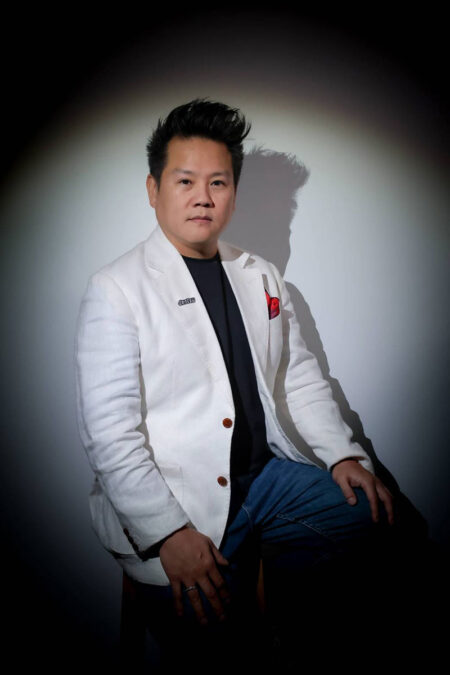
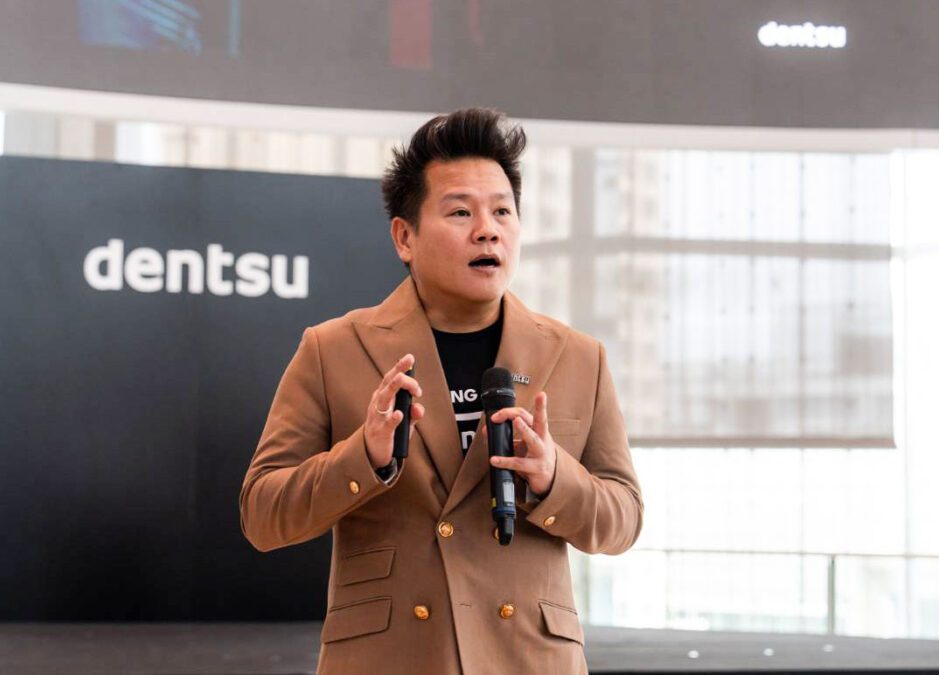
Mr. Oliver Kittipong Veerataecha, Chief Marketing and Innovation Officer of Dentsu Thailand,
plays a key role in guiding the adjustment of marketing communication strategies to set the proper direction for the development of Thai tourism.
If you mention his full name, Oliver Kittipong Veerataecha, many might not be familiar with him. However, if you refer to him as “Ajarn O” (Teacher O), those in the tourism circle—from the Tourism Authority of Thailand (TAT), which is responsible for developing Thai tourism, to people in local tourism communities across the country—are all well-acquainted with and respect the expertise that this lecturer and consultant willingly shares for the benefit of Thai tourism development in all aspects.
Growing up in a career focused on strategic planning and consumer behavior research, and having extensive experience working with multinational companies in market research, Oliver later joined Dentsu Thailand, giving him opportunities to serve as a strategic planning consultant for various companies, especially in launching new products across a range of industries.
“When we have experience working in a business that involves planning marketing communications for brands, we get to witness the competition in various businesses, each with its own unique conditions and dynamics. One of the clients I had the opportunity to work with in terms of brand communication strategy was the Tourism Authority of Thailand (TAT).
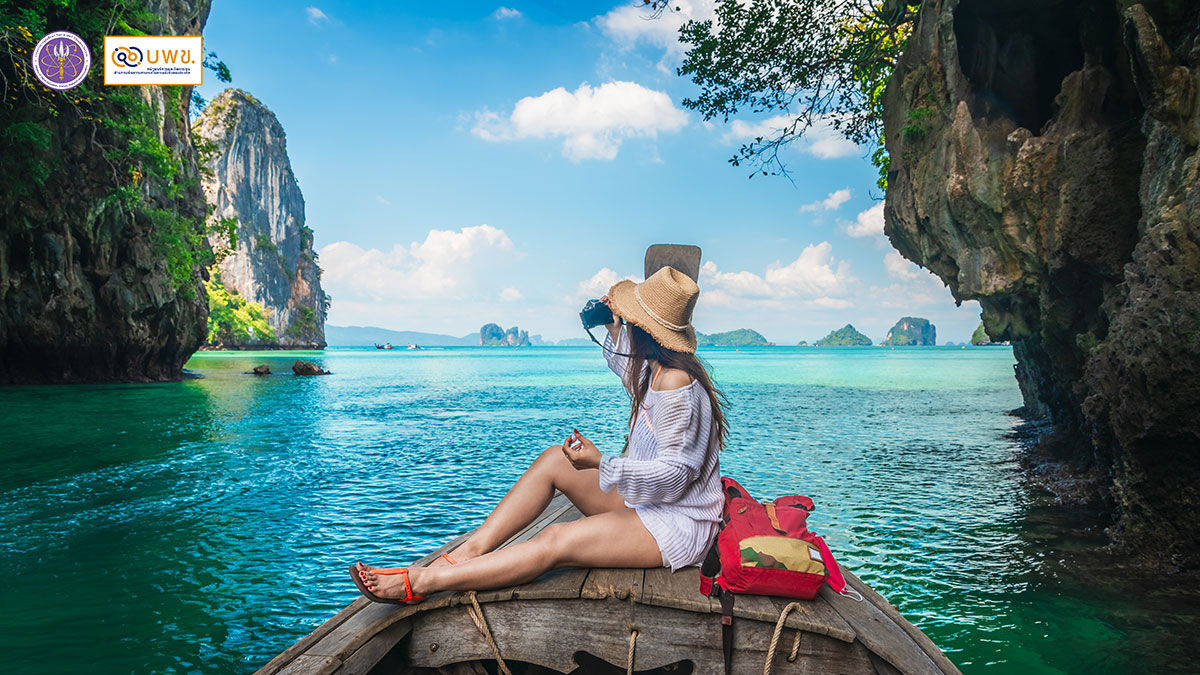
TAT approached us with a very significant policy objective, as Thailand ranks among the top countries in the world in terms of tourist arrivals. Especially now, as the COVID-19 crisis has eased, Thailand’s tourism sector has been able to recover very quickly. It can almost be said that the number of tourists visiting Thailand is back to pre-COVID levels, if not even higher.
However, in the past, there has been a key issue regarding tourism strategy planning. One of the prominent concepts that has been raised is that Thai tourism should not focus on quantity but rather emphasize quality. This is the origin of the High Value Traveler strategy, which aims to reduce the number of ordinary tourists and focus on attracting high-quality tourists—those who can significantly stimulate the economy and spending—while also making it easier to preserve our natural resources.
From another perspective, developing the tourism industry must go hand-in-hand with raising awareness among all sectors. While opening up the country to tourists does generate revenue for the nation, it also means welcoming people who come to consume and utilize our resources without proper management. Ultimately, this could lead to the country facing a net loss”.

It was from this point that Mr. Oliver began taking on a role as a consultant for TAT in designing tourism strategies to attract quality tourists from around the world to visit Thailand. Later, Mr. Oliver also became a speaker, sharing insights and effective strategies on tourism management with TAT executives on a regular basis.
“Since I became known in the tourism circle, I’ve had the opportunity to engage with local communities, business owners, investors, and NGOs. When visiting real tourism sites, I must admit that while Thai people are very capable problem solvers, we still have weaknesses when it comes to planning. But I believe that marketing planning concepts can help us foresee what trends will emerge in the future—whether next quarter, the next half year, or next year. This is an area where I am dedicated to imparting knowledge to local leaders and entrepreneurs”.
“The work I’ve done, which involves creatively contributing to and developing the Thai tourism industry using my knowledge and experience, has never been about money. I can confidently say that the reason I willingly engage in these efforts is because of my deep respect and belief in our country. As a Thai myself, I want to see our nation develop in the direction it should, so we can keep pace with all the global changes”.
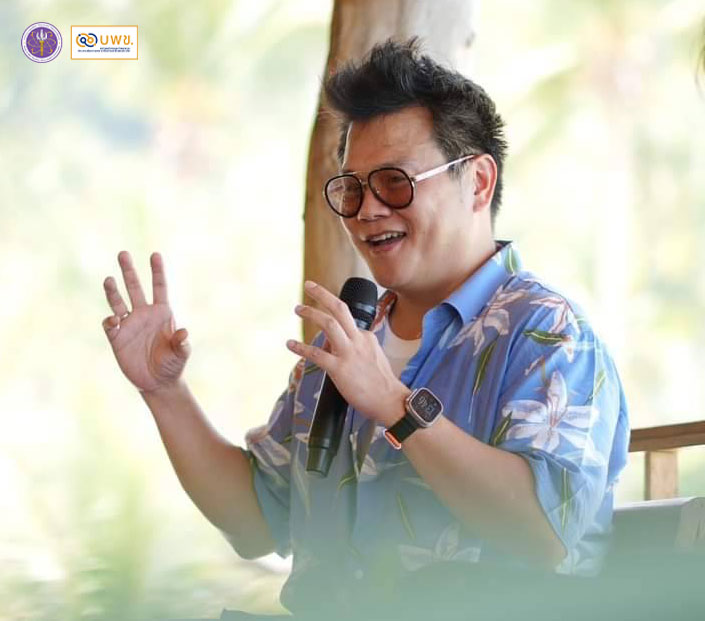
2 Success Cases: Turning Crises into Opportunities and Redefining Thai Tourism: positioning a new branding strategy for Phangan Island in preparation to become one of the dream destinations for tourists from all over the world.
To illustrate how marketing communication and brand-building strategies can ‘turn crises into opportunities’ and create a new image for dream destinations among tourists worldwide, Mr. Oliver presented two successful cases where he acted as a consultant to local communities, sharing them in a straightforward manner:
“In the past, I served as the Chairman of Strategy for three islands in the Gulf of Thailand: Koh Samui, Koh Phangan, and Koh Tao. The leaders of these three communities came to consult me with a similar core problem: today, there are so many tourists coming to these islands that they don’t know how to manage the influx. Therefore, the primary challenge for these three tourist islands is: How do we manage tourism on these islands in a more systematic way?”
“Starting from Koh Phangan, which has already been branded as a party island due to the globally renowned ‘Full Moon Party,’ it must be acknowledged that after the COVID crisis eased, Koh Phangan recovered faster than many islands in Phuket. This is largely because Koh Phangan has a very distinct selling point regarding the ‘Full Moon Party.’ However, the leaders and the community of Koh Phangan want the island to be recognized for other aspects as well.”
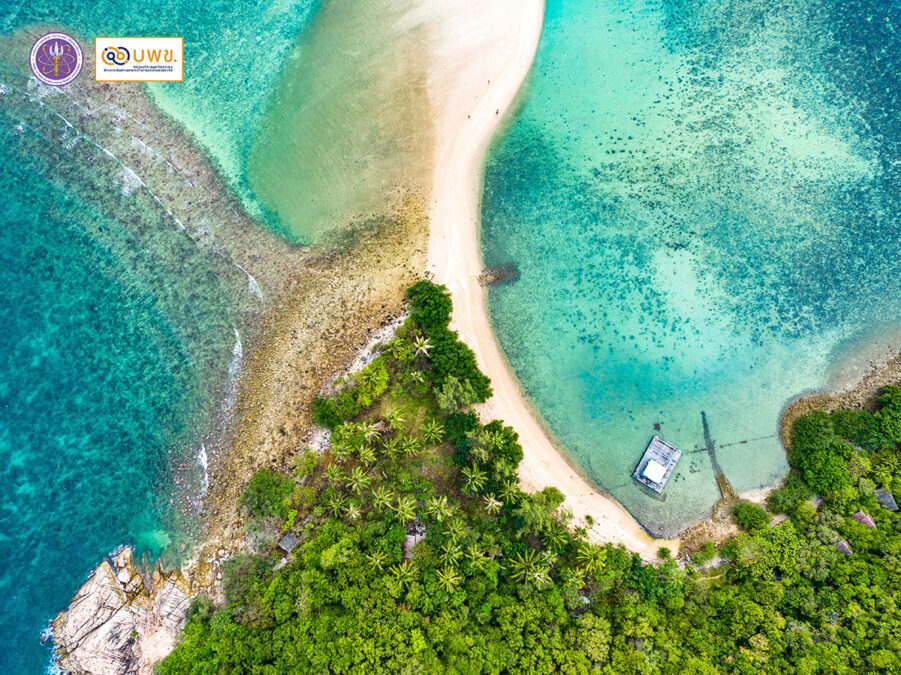
“To plan and manage tourism in the area, I needed to visit the site to understand the cultural costs, the structure of the community, who the stakeholders are, and what the mechanisms are that drive the economy of Koh Phangan. Through my visits to study these matters, I met and talked with people from various sectors, which led us to create a strategy for Koh Phangan that has been adapted over the past 10 years.”
“Today, Koh Phangan is divided into five zones. One very important zone is Haad Rin, the traditional party zone. When we were organizing this zoning, questions arose about whether we should divide this area. I believe it must be included because this area has made a name for itself, making Koh Phangan known to tourists worldwide. We must prioritize this unique area that attracts global visitors, ensuring that the local community has means to live and earn income primarily from hosting the Full Moon Party.”
“However, the key challenge in creating new perceptions about Koh Phangan is how to manage this island, given that the world recognizes it as a Party Island, while also extending awareness to other positive aspects of Koh Phangan.”
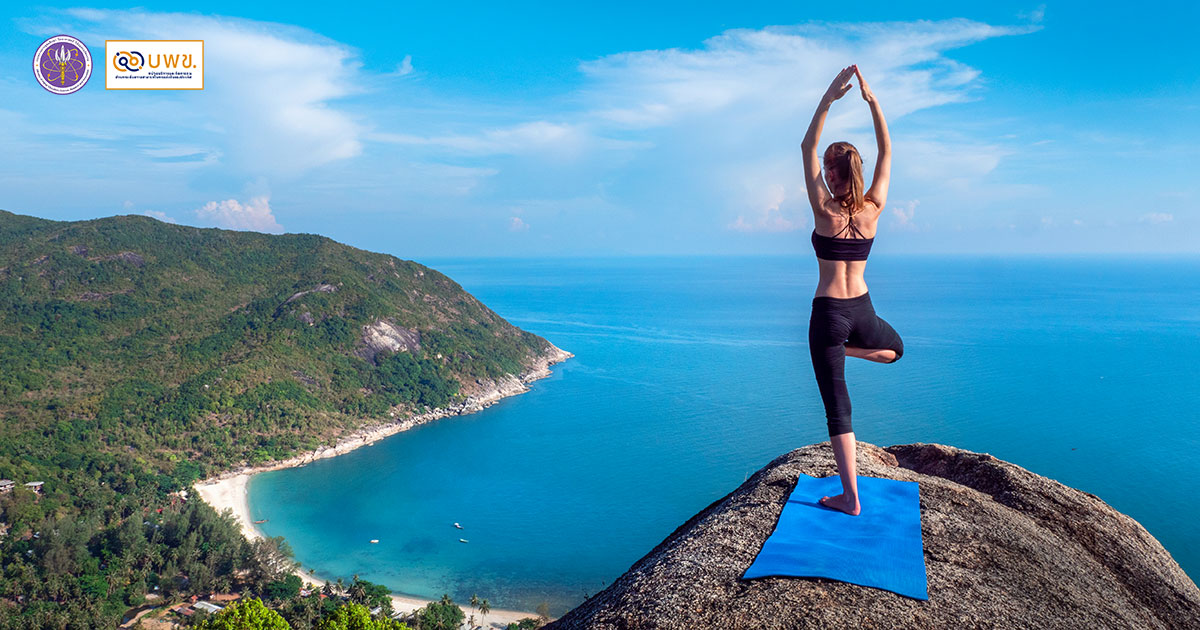
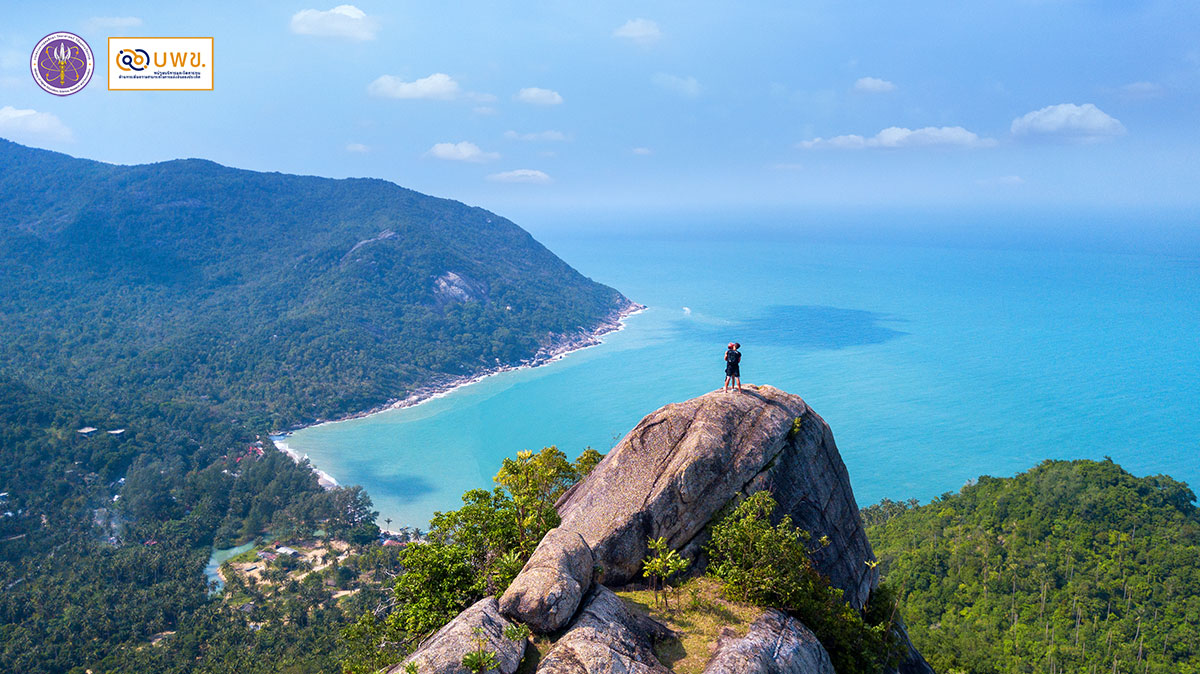
“From my explorations of Koh Phangan, I discovered many other interesting zones that could be promoted to enhance the island’s reputation. For instance, the highest mountain on Koh Phangan is the tallest in the Gulf of Thailand and offers stunning views. From Koh Phangan, one can see the Ang Thong National Marine Park, Koh Tao, and even part of Koh Samui. This area also attracts many wellness tourists, revealing another dimension of Koh Phangan’s appeal to tourists seeking wellness tourism.”
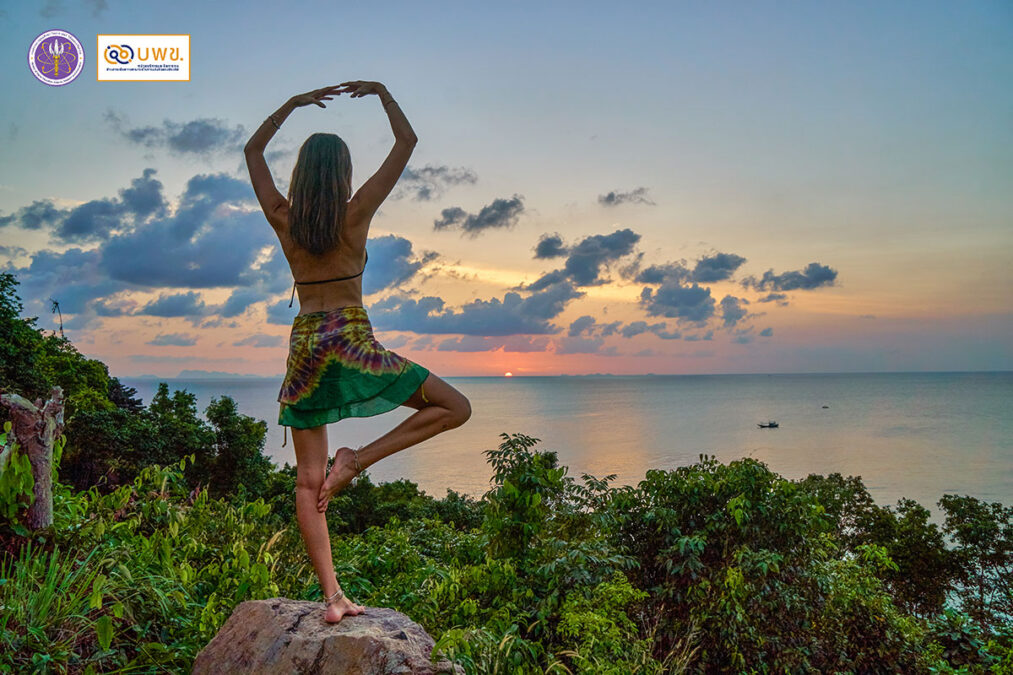
“This is because there are opportunities for interested individuals to learn about Sound Healing and advanced yoga practices here. Koh Phangan is home to one of the best Naked Yoga schools in the world. Moreover, there is a beautiful waterfall on the island, rich in history dating back to the reign of King Rama V, who visited the area approximately 17 times during his reign. Upon investigating the reasons behind King Rama V’s visits to Koh Phangan, it was discovered that he would come during the full moon. This has been interpreted as being related to a superstitious belief that bathing in moonlight at the most optimal angle in the country would cleanse one of negative energy.”
“Not only that, but Koh Phangan also has a unique type of durian grown on the mountain known as ‘Durian Let Lard,’ which is similar to the Chanee variety. It has very large seeds that protrude from the flesh, and it tastes delicious.”
Once Mr. Oliver understood the strengths and overall context of the area, he drafted a strategy in collaboration with the local community and various stakeholders. This led to the redefined marketing positioning of Koh Phangan as ‘Koh Phangan: The Island of Power’ or ‘The Island of Power Energized by The Moon,’ to convey that this island is ready to empower those who visit.
“The area designated as the party zone will be referred to as the ‘energy release zone,’ while the zone for yoga or welcoming travelers interested in wellness tourism will be called the ‘energy reception zone.’ The area designated for community agriculture is the tourism energy zone in terms of the green economy. With Koh Phangan having such a clear stance, I am confident that the perception of Koh Phangan as merely a party island will gradually fade away, replaced by its more appealing and positive aspects.
In the past, when we attended the International Tourism Fair, or ITB, held annually in Germany, it was evident that the difference in marketing strategies was significant. We must acknowledge that people around the world today are drained of energy because they are exposed only to negative influences. The moment they hear that Koh Phangan is the island of energy, it acts as a magnet in marketing. This is about applying branding science to turn a crisis into a clear opportunity.
Therefore, our role is to strategize perception to create value for the tourism system, the economy, and the quality of life for people. These are things the local community can manage on their own, but it won’t be systematic. Our responsibility is to reflect the reality on the ground, to present and communicate the facts happening in the area in a captivating way. This involves leveraging the cultural capital of each locality to creatively generate new value for the area.
Consequently, working with the community to redefine tourism in Thailand has become another passion of ours. We see our role as contributing to the country, which aligns with the fact that GDP and income from the tourism sector significantly contribute to Thailand’s economy. Our tourism income is among the highest in Southeast Asia. We must recognize that we possess better tourism resources and cultural capital than any other country, but we still face challenges in managing these resources systematically.
When we engage with the community to achieve mutual understanding, it leads to activities that promote tourism. Every year, Koh Phangan hosts the ‘Colorful Moon Festival,’ which we organize to demonstrate that community energy will be a key to ensuring Koh Phangan can sustainably manage itself. In reality, when a tourism strategy is established based on concepts and a value proposition regarding its stance, it fosters adaptability. Everyone will have accountability for their respective roles, and all parts can connect, creating synergy.
This builds on the results from crisis management to establish a new stance for Koh Tao as a model island, driving toward Net Zero Tourism.
Now we arrive at another island renowned worldwide as a ‘paradise for divers’—Koh Tao. Despite a steady influx of tourists to Koh Tao recently, one significant blemish making it an unsafe destination for tourists persists: the murder case of a British tourist on the island in 2014.
This unfortunate event led the official UK government website, gov.uk, to raise awareness about Koh Tao as a cautionary tale for its citizens to be careful when traveling to Thailand, as long as Thailand does not address the unresolved case of the British woman who was murdered years ago.
Moreover, looking back at the time this incident occurred, the global media outlet The Sun clearly headlined the murder case on Koh Tao, labeling it as ‘The Dead Island in Thailand.’ This crisis prompted the need for solutions to restore the good name and reputation of Koh Tao.”
“In the case that occurred on Koh Tao due to the murder of a tourist in 2014, the solution for restoring Koh Tao’s reputation is not about branding; rather, it is essential to investigate the reasons behind the murder of the British tourist. The fact is that it was committed by foreign laborers, and the perpetrators were not Thai.”
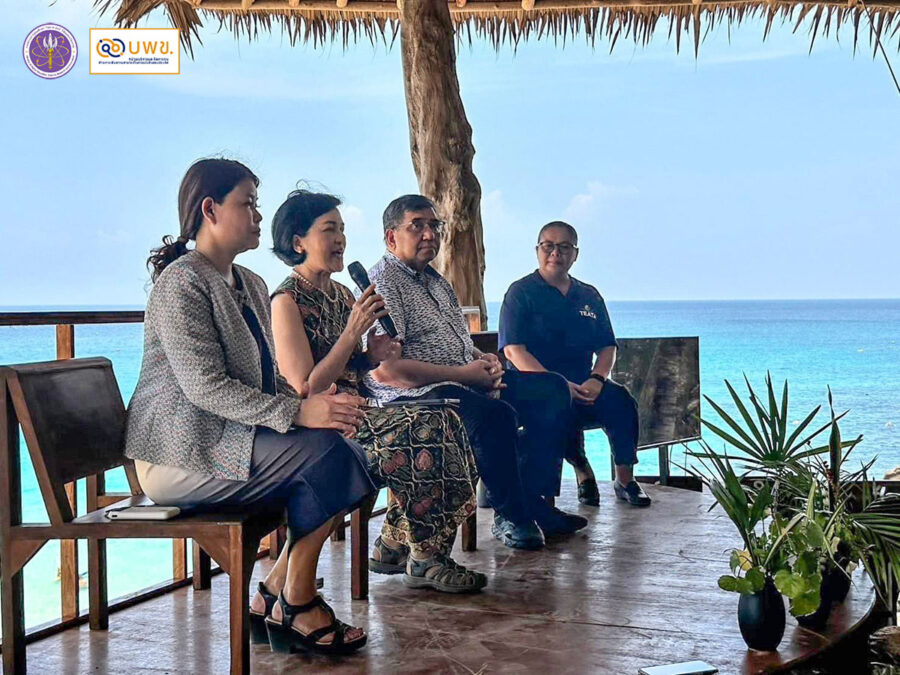
“Therefore, this situation calls for crisis management, and the responsibility of all sectors is to strive to uncover the truth to clarify the case and resolve the matter. When we are committed to seeking answers, the British government sees that the Thai authorities are not being complacent. It turns out that after this unfortunate incident, we made changes by requiring all shops on Koh Tao to have CCTV cameras, and everyone must help keep an eye on the island.”
“The key selling point of Koh Tao is that it is a premier diving destination for divers worldwide. Koh Tao is also an excellent place to learn scuba diving, and historically, it was known as an island primarily engaged in fishing. Those who have moved to Koh Tao are descendants of residents from Koh Phangan. As for learning to dive, visitors coming to Koh Tao for this purpose must purchase expensive courses costing tens of thousands of baht. Thus, the activities on Koh Tao are inherently premium, and the number of tourists is screened or selected by the financial requirements to come to Koh Tao and learn to dive.”
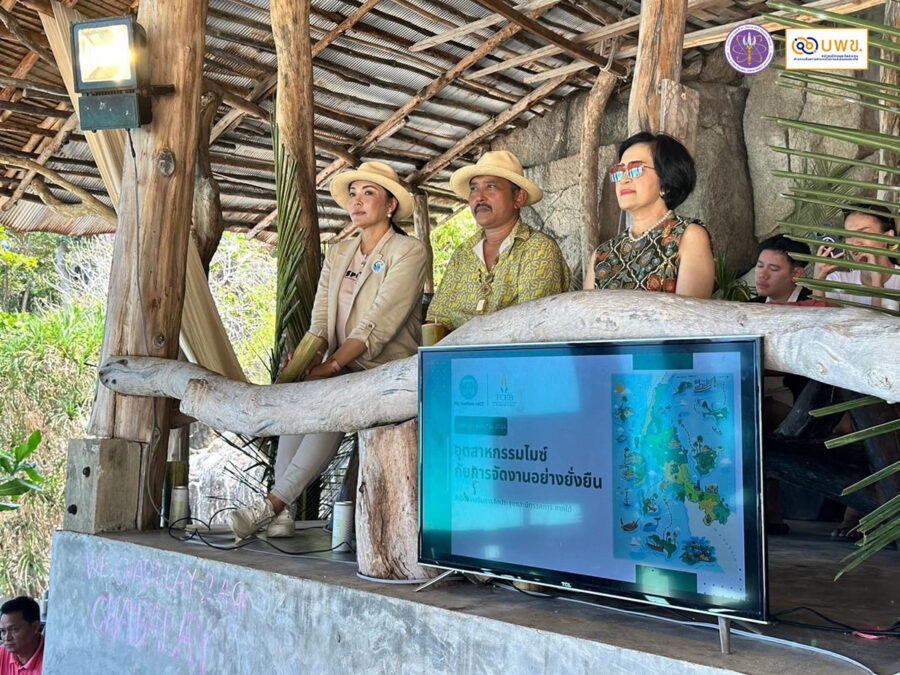
“On another front, when Koh Tao welcomes tourists coming to learn diving, this group of tourists are already protective of and loves natural resources because the joy of diving lies in witnessing the vibrant underwater nature. Environmental conservation efforts have also emerged on Koh Tao, such as the initial decision to stop providing plastic bags in convenience stores, which has now been adopted nationwide.”
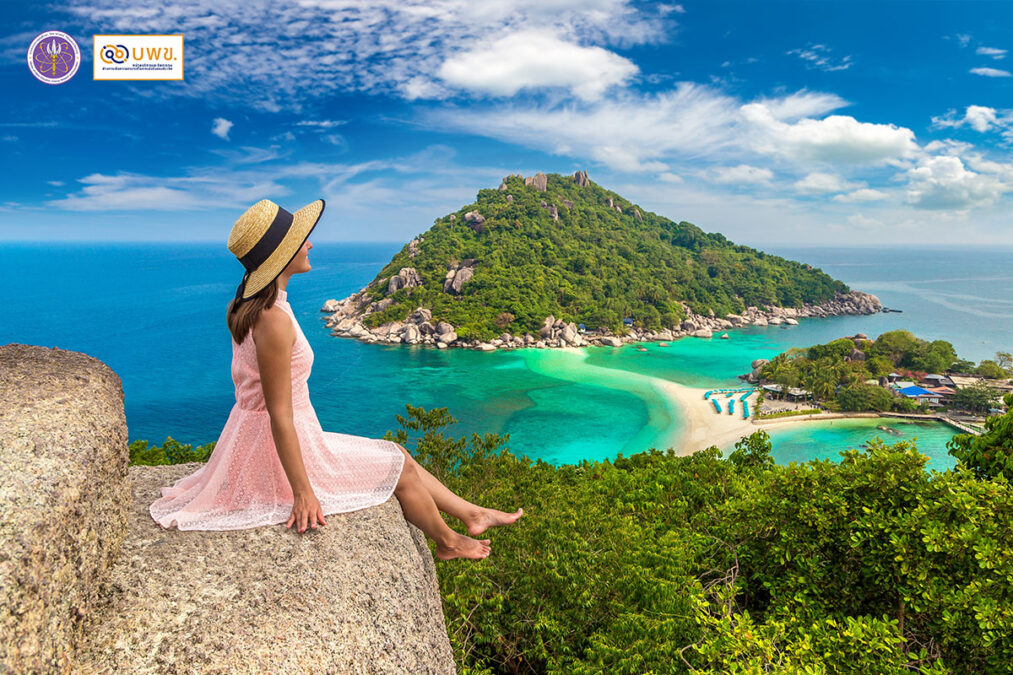
“Thus, Koh Tao stands as a model for sustainable nature conservation globally and will serve as a model for sustainable development at the national level, reflected in its current title, ‘The Island of Purity – Drive into Nature,’ conveying that this island is a place of purity, and everyone entering it must be part of preserving its purity.”
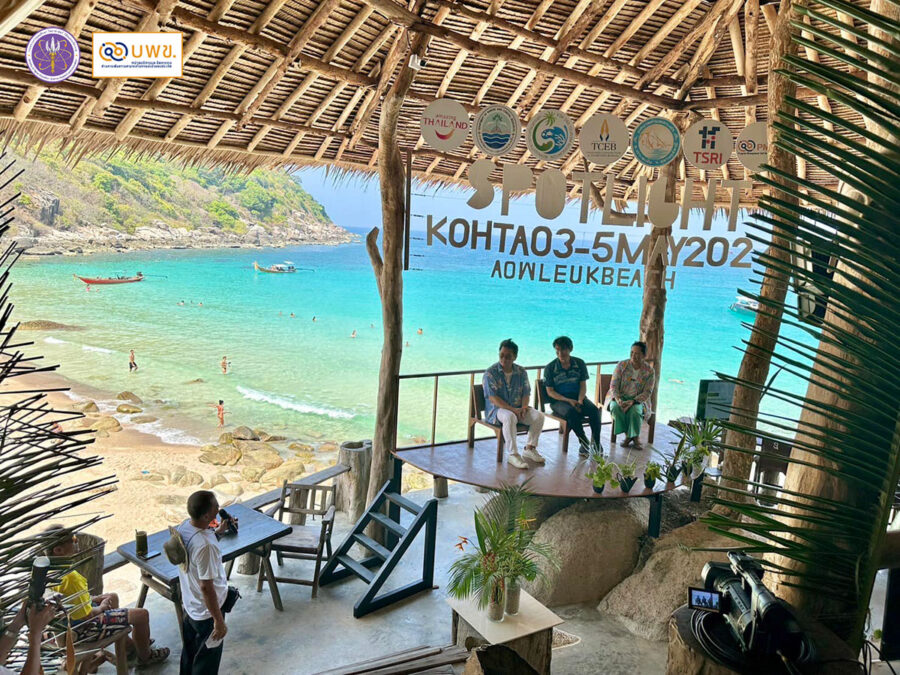
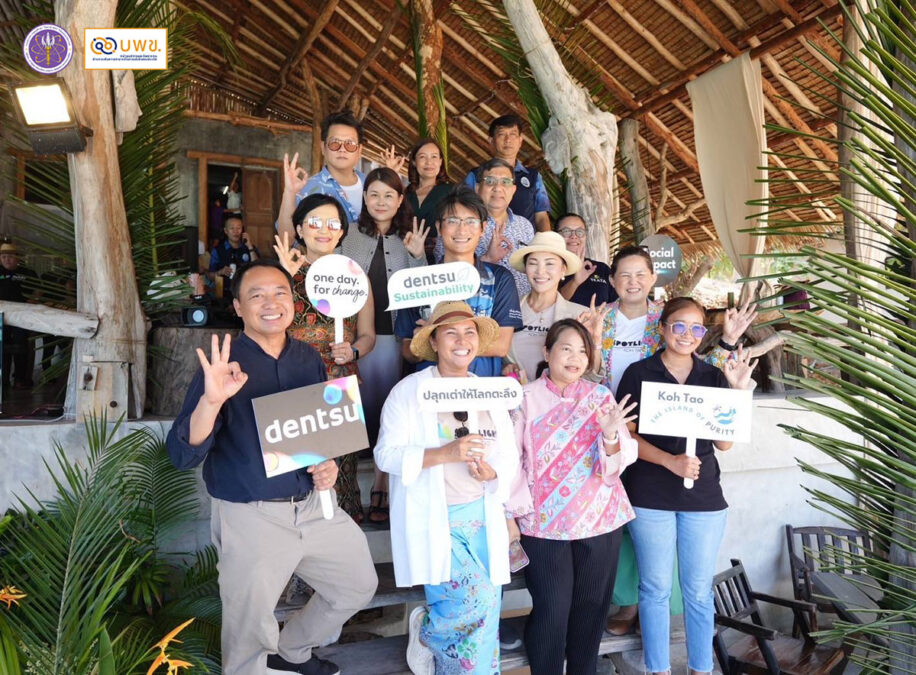
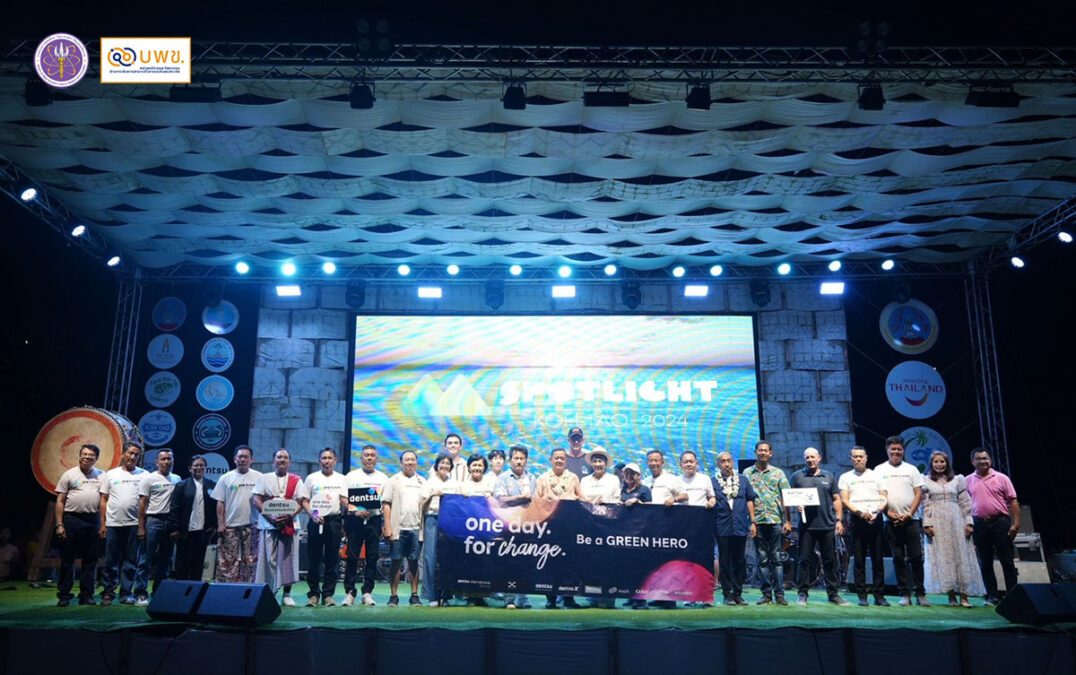
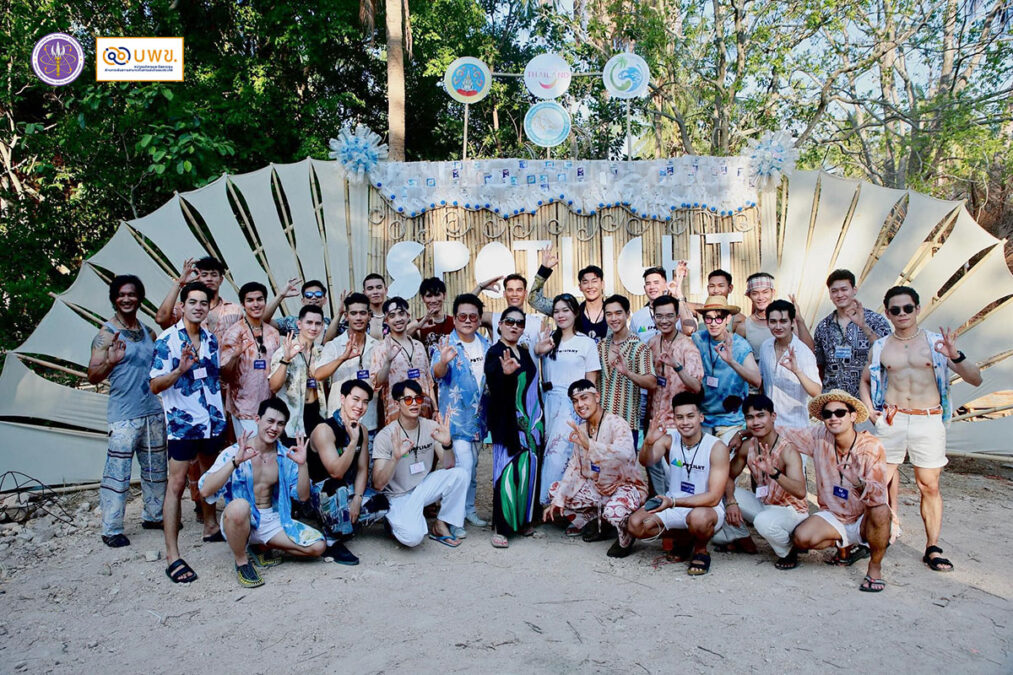
“Once Koh Tao established a clear stance, we built upon that by organizing the Spotlight Koh Tao Festival two years ago, to showcase a clear direction for Koh Tao towards sustainability. We have formed a strong network, becoming the 20th island to collaborate and sign the Koh Tao Declaration, agreeing that the island’s economy differs from typical tourism, especially regarding waste management. When tourists visit our island, they bring waste but do not take it back with them. We need to figure out how to manage waste effectively. This is the challenge.”
“We have a model enterprise on Koh Tao, exemplifying sustainable management that is practical, which is Ban’s Diving, the largest diving school on the island. They decided to create their own ecosystem. If there’s no water, they dig their own well; if there’s no food, they grow plants to eat. When waste is produced, Ban’s Diving manages it through the concept of food waste. Leftover food from serving customers is transformed into fertilizer, and used water is treated before being used to water plants. Consequently, it has become a learning center on Koh Tao for circular economy practices.”
“Regarding the issue of overtourism, I personally see that this situation is better than having no tourists at all. However, what we need to do to tackle this issue is to enhance the local management structure. Is there sufficient management to foster responsible tourism? We must acknowledge that Thailand still has shortcomings in this regard. If there is effective management, the problem of overtourism can undoubtedly be managed easily.”
For example, the implementation of Data Driven Marketing can be beneficial in island tourism. We can check tourist data from the boats that service arrivals to the islands. If there is a significant influx of tourists during weekends, measures should be announced to limit the number of tourists and redistribute visits to weekdays or the low season. Additionally, there can be measures for collecting tourist taxes at various attractions. If these strategies are implemented, the problem of overtourism can gradually be alleviated.
Furthermore, fostering an understanding across all sectors about sustainable scenarios will allow businesses to continue progressing. Tourists will have positive experiences while traveling, and the nation can drive its economy through the revenue generated from tourism, all while minimizing negative impacts on the environment and nature that we have left. If everyone shares this vision, sustainable tourism development will be able to advance continuously.
From my experience as a consultant for Thailand’s tourism sector, I have observed a growing awareness and ongoing application of sustainable tourism practices in businesses. Everyone recognizes that if action is not taken or adjustments are not made today, disasters can certainly occur. This awareness is not limited to large tourism businesses; medium and small enterprises are also adapting in this direction.
The cooperation of all parties working in local areas is the key to achieving sustainable tourism development in Thailand.
When asked about his views on developing Thai tourism down a truly sustainable path, Mr. Oliver candidly expressed that:
“In the past, I have found that building understanding and providing knowledge to community members or local tourism operators through training may not be as effective as going into the field to foster collaboration among all parties. The best way to understand the real issues faced by local tourism operators is to empathize with them and instill a sense of responsibility in all operators. One tool that can lead to a shared understanding is implementing Practice Based Activities among the government, private sector, tourism operators, and local communities.”
“Moreover, when conducting research for tourism development, it shouldn’t be research that is done in isolation and then applied to the area later, as locals may feel no connection to it. Ultimately, such research will just become theoretical. Therefore, it should be research that, upon securing funding, is discussed with the community or the local populace, allowing local operators to participate as a sample group in the research team or as the target group for applying the findings. Such research will be valuable and immediately applicable because the researchers will not be the only ones involved; the community members will also feel a shared responsibility for the changes that affect their area. Researchers and academics need to understand and integrate well with the locals or local operators; otherwise, locals may see academics as elitist, making collaboration difficult.”
“Tourism operators differ from other business operators in that they have strong ties to their communities. This is an important challenge for the government or agencies supporting research; they need to understand that the key to conducting research that benefits the tourism industry truly lies in the ability to open dialogues and consider how to encourage local operators to be receptive. When there is no openness or connection with thought leaders in the community, it becomes challenging to conduct research and apply its findings.”
As mentioned earlier, another role of Mr. Oliver is as an expert in the tourism and creative economy program of the Tourism Authority of Thailand (TAT). He shared additional insights regarding funding support for research aimed at enhancing the competitiveness of Thailand’s tourism industry, stating:
“Simultaneously, serving as a consultant for various communities or localities in tourism development has familiarized me with the creative tourism plans of TAT. Having an agency like TAT that provides funding support to operators and researchers to enhance the competitiveness of Thailand’s industry and business is extremely beneficial.”
“However, TAT should not merely be an agency that empowers; it must also coordinate and collaborate with local tourism operators. As stated earlier, conducting tourism research to foster sustainable tourism development in local areas requires that research teams and academics engage with communities from the outset and provide opportunities for local residents and operators to participate in using the research to develop their homes and improve local attractions. After all, collaboration and partnership will lead to genuine sustainable development.”
“From my experiences working with communities and localities, I approach the field with the intention of genuinely assisting them in managing tourism, not merely as a corporate executive but as a Thai citizen who wants to see every tourist destination in Thailand managed systematically towards sustainability. Local government agencies have asked if I charge fees for my consulting services, and I have clearly stated that I am not in the field as an organization executive; I am there as a Thai person who wants to see tourism in this area develop sustainably. We jokingly said that I would accept salted fish as my fee, and we called our agreement the ‘Salted Fish Pact,’ allowing me to enjoy the delicious salted fish from Koh Phangan every year”.